


Trump supports united Ireland: Statement that Puts Britain on Spot
President of the USA, Donald Trump, sparked political controversy during his visit to Ireland on 12 September 2026. In
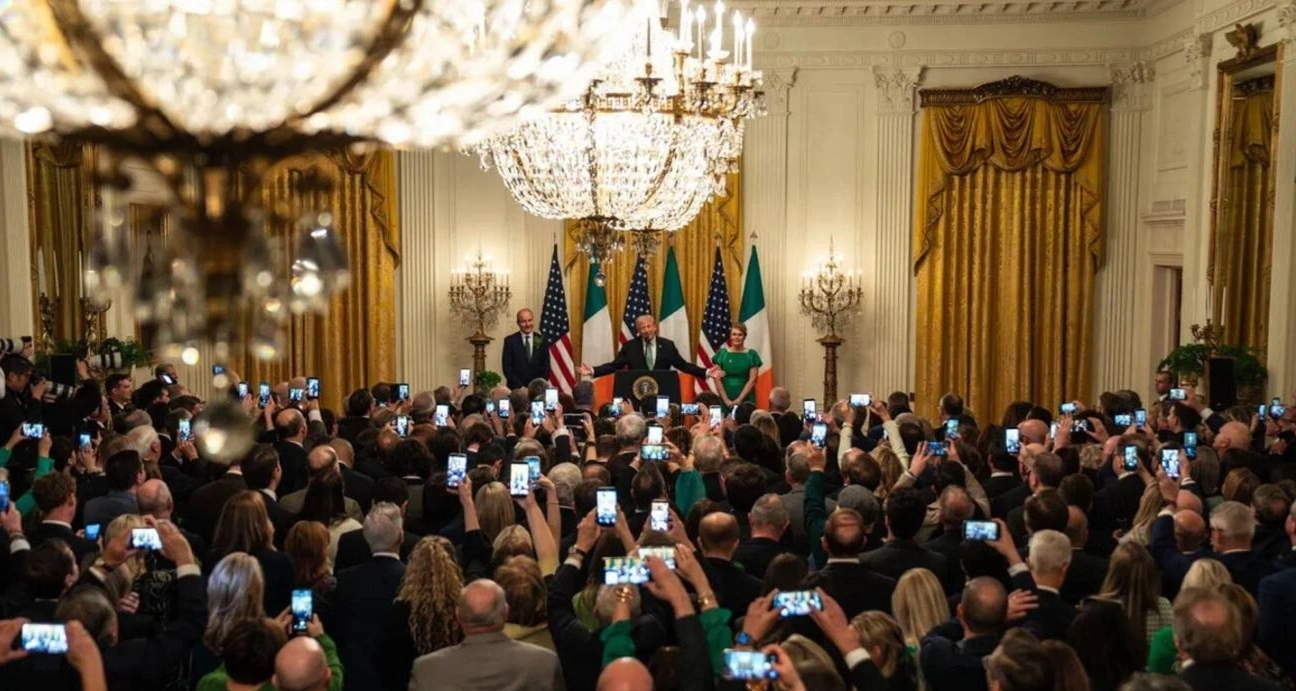
President of the USA, Donald Trump, sparked political controversy during his visit to Ireland on 12 September 2026. In an interview in Dublin, he expressed that he wished to see Ireland united, and added that it will come eventually anyway. The phrase ‘Trump supports united Ireland’ quickly became part of the political discussion, as his statement touched on one of the most controversial issues in British and Irish politics.
For many people in Northern Ireland, the matter is not a discussion of theoretical border problems, but it relates to issues of identity, safety, and the future of their community. This article analyzes the reasons why Trump’s statement is important and the reaction of political leaders to it.
What Did Trump Really Say?
The remarks came following Trump’s meeting in Dublin with Irish Prime Minister Micheál Martin. He stated that he did not wish to stir any trouble, but at the same time he wished to see the island united. In his opinion, such an outcome would be “fantastic” and beneficial.
The language was clear, but no policy was outlined. Trump did not present a plan, did not name any actions of the US government, and did not give recommendations on how to hold a referendum. It was a response to a journalist’s question, which revealed only his personal preference rather than creating an official policy for Washington. This is an important difference.
Reasons why Northern Ireland’s Position is Sensitive
There are historical reasons behind Northern Ireland’s political conflicts. There was a partition in Ireland at the beginning of the twentieth century whereby there was a division between Northern Ireland, which remained within the United Kingdom, and the Irish Free State that later became the Republic of Ireland. The partition created a boundary between the two regions based on the national identity of the people.
Many unionists wanted to maintain their British identity, while the nationalists would prefer a united Ireland. That is how the troubles erupted and continued for many years, causing suffering in communities and deeply affecting political and social life. In that sense, unification becomes a painful process because of memories of violent conflict. The 1998 Good Friday Agreement provided a new approach to peace.
Good Friday Agreement and the Consent Principle
The Consent principle is crucial in this case. Northern Ireland will remain a part of the United Kingdom unless a majority in Northern Ireland decides otherwise. The agreement also includes the right of citizens in Northern Ireland to have their identity as either British, Irish, or both. Such a provision is necessary due to the great variety of political identities existing in the area.
The government cannot hold a referendum on unification automatically. According to the agreement and legal provisions, it is up to the British government to decide when the circumstances allow holding a referendum.
The government should take into account the possibility of getting a majority that will agree with unification of Ireland. The agreement does not include a requirement to hold a referendum just because a politician requests it. The phrase ‘Trump supports united Ireland’ does not change this legal reality.
A Robust Reaction from Unionist Leaders
The unionist leaders reacted strongly to Trump’s words. The leader of the Democratic Unionist Party, Gavin Robinson, denied that any foreign leaders could influence the future of Northern Ireland.
It is Northern Ireland, not British, Irish, or American politicians, who will decide on it, according to Robinson. The union with Great Britain is an essential element of the national identity for the unionists. Besides, the unionist community sees the UK as the only guarantee of their political and cultural positions.
Trump’s words therefore sounded to them like a signal that someone approves their worst scenario. For this reason, the claim that Trump supports united Ireland has attracted particular attention among unionist politicians.
Position of London and the Task for Burnham
The statements by Trump have put the UK government in an uncomfortable situation too. Burnham had stated that no referendum was on the cards currently. Downing Street re-stated that the government felt that there were not sufficient grounds to conduct a poll at present. It is a very delicate situation for the government.
They need to continue their cordial relationship with the US government while adhering to the spirit of the Good Friday Agreement. At the same time, they need to make sure that the people of Northern Ireland do not perceive that their destiny will be decided through external pressure.
Trump supports united Ireland: Why It Matters.
But the crucial issue is whether this stance from Trump shows a general change in American policy on this question. Former American presidents did not tend to express an opinion in public about the constitutional future of Northern Ireland.
They tended to have deep personal or family ties with Ireland, yet at the same time they promoted the peace process without taking sides on what it should lead to.
The USA was very influential during the negotiations that produced the Good Friday Agreement. President Bill Clinton supported the peace process and provided diplomatic room for negotiations.
However, the British and Irish governments and Northern Ireland’s political parties reached the Good Friday Agreement through negotiations. Trump’s comment is quite different from this strategy. That is why the phrase ‘Trump supports united Ireland’ needs to be considered carefully.
Public Opinion and the Constraints on Political Forecasts
This forecast also raises another question of a practical nature: to what extent does such an opinion enjoy public support? Polling in Northern Ireland has been consistent over the years, showing more people in favor of the union with Britain rather than affiliation with the Republic of Ireland.
But attitudes can change, and the Brexit issue highlighted the issue of the border and, more importantly, the future relations between Northern Ireland and the rest of the United Kingdom. A poll cannot be equated to the outcome of a referendum.
One’s answers in a poll can be different from those he will give in the actual voting during the campaign. Public opinion could also depend on the terms under which Ireland will unify. The debate about whether Trump supports united Ireland may influence public discussion, but it cannot determine how people will vote.
The Broader Diplomatic Environment
His statements were made during a trip that combined the purpose of diplomacy with Trump’s passion for golf. Before going to his golf resort in Doonbeg, he had discussions with political figures in Ireland. His visit also drew protests from people who opposed his policies on Gaza and Iran.
The broader context is important as the statement was made not within the context of a prepared diplomatic statement regarding Northern Ireland. It was made during a trip which had various political and personal components.
This fact does not undermine the significance of the statements, but it means that we should not view them as part of the diplomatic strategy in question. In such circumstances, even a brief remark can serve as an acid test for diplomatic relations. In this context, Trump supports united Ireland. Clearly, this is a political description of his words rather than a formal diplomatic position.
Words Cannot Take the Place of Consent
Trump’s statements have stirred up a controversial topic and put Britain in a difficult situation. His advocacy of a united Ireland is at odds with the current position of the British government that a referendum is not necessary. Unionists have reacted to it as well, stating that the future of Northern Ireland is entirely dependent on its citizens. However, the fundamental laws remain intact.
The Good Friday Agreement ensures the right of democratic consent to decide about Northern Ireland’s fate. Trump cannot organize a referendum, and his opinion cannot influence its result. His statement cannot serve as evidence of any change in American policy either.
Trump’s Remarks damaging US-UK Relations
Trump’s support for a united Ireland threatens the US-UK relations, especially since Trump also recently stirred up controversy over the Falkland Islands. Trump questioned Britain’s will to defend the islands.
Such remarks from the president of London’s closest ally place Britain in a hard situation. Trump’s approach has turned diplomacy into a tool of pressure. This approach is making the UK pay a price in its own internal stability and in its global reputation.