

United Ireland: How Realistic Is a Future Border Poll? An Interview with Tadhg Hickey
Support for a United Ireland has been changing, particularly among younger voters. Irish comedian, writer, filmmaker and political activist
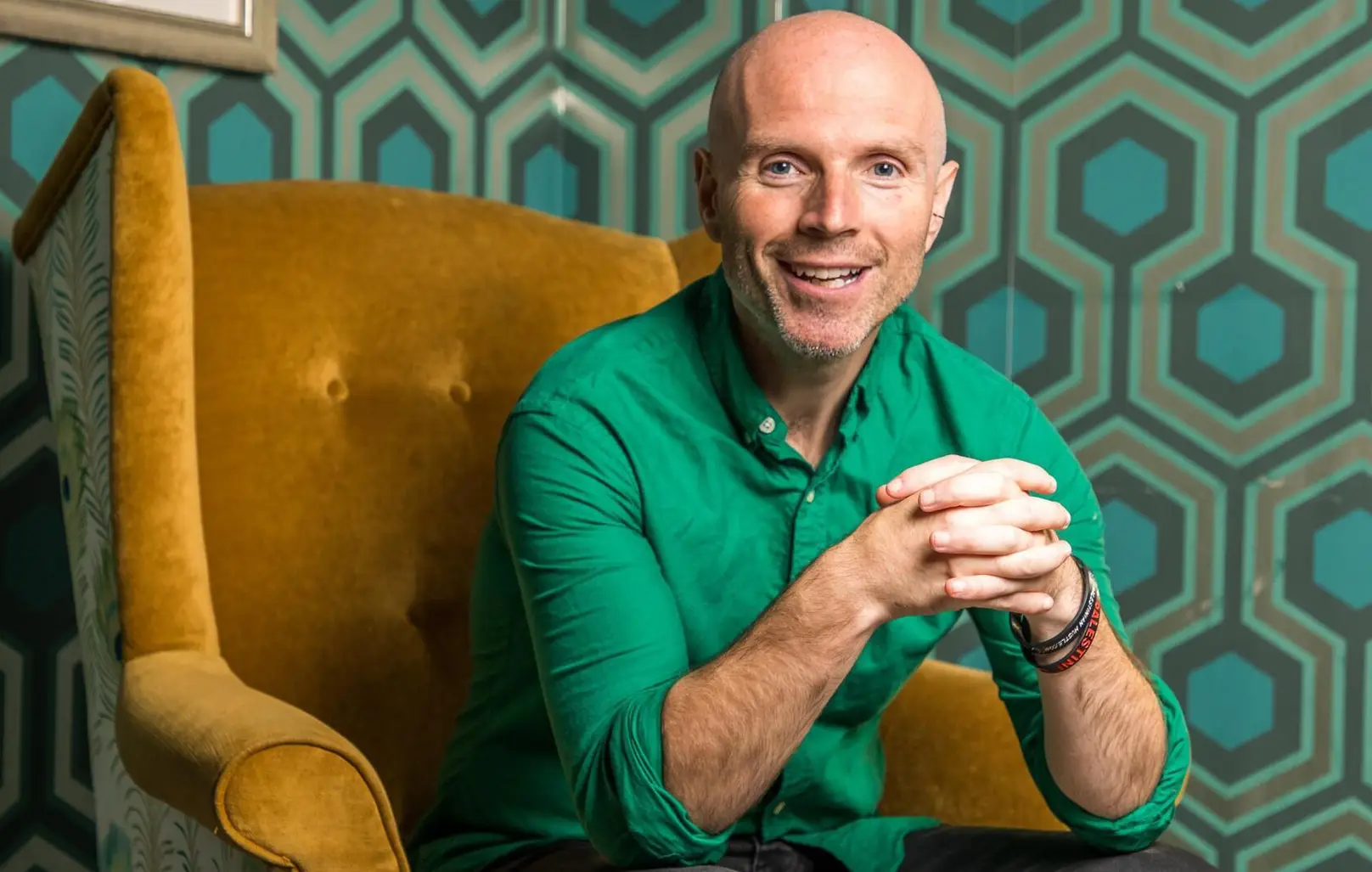
Support for a United Ireland has been changing, particularly among younger voters. Irish comedian, writer, filmmaker and political activist Tadhg Hickey shares his views on the latest polling, demographics, Brexit, the economic debate and what would need to happen before a future border poll becomes realistic.
1. The UK government has said a border poll would only be considered if there is clear evidence of a significant change in public opinion. How realistic is a future United Ireland border poll under the current political conditions?
The current UK government position has said that a border poll would only be considered if there is clear evidence of a significant change in public opinion. And then you say, how realistic is a future united Ireland border poll? So there’s 2 things there.
The First One
The first thing is that there is already evidence. It’s not incredibly rapid, but there is clear evidence of an increase in support for united Ireland. One of the adjudications of this, or one of the sort of the surveys that are most sort of, reproduced and quoted, is the Northern Ireland Life and Times, the NILT survey. In 1998, 22% of people surveyed said they’d prefer Irish unity. In 2025, 33% said they would. And this is without a clear demarcation of what that unity would look like. So just on a purely logical point, there is a shift in people being interested in a united Ireland that’s growing at a rapid rate. And okay, maybe not rapid, but it is growing, particularly since Brexit.
The second One
The second thing is, how realistic is a future border poll? A lot of people would feel that because of the demographics alone, Catholics and nationalists tend to have more children. That the, the vote is inevitable. It’s going to happen, I would say, certainly in the next 20 years, arguably in the next 10 years.
The problem is with the British state is that there isn’t a massive amount of will from the British public at the moment when Britain has really moved to the right. They’ve become more triumphalist, more conservative, even within the Labour Party.
At the moment, there isn’t a will from the British government to go there. But I feel like if Britain was to, to elect a properly left-leaning government like Jeremy Corbyn’s Labour, for instance, in the past, we would already be putting the wheels in motion for a border poll, which has to be triggered by the British so-called UK Secretary of State for Northern Ireland.
2. The Good Friday Agreement says a border poll should be held if it appears likely that a majority would vote for a United Ireland. What evidence would the UK government realistically need before calling a United Ireland border poll?
What actually triggers a border poll? It’s if the Secretary of State of Northern Ireland sees that a majority is likely. You could argue that majority is not clear-cut right now, but it’s only heading in one direction.
Again, because what I was saying about demographics, and because of— in the post-Brexit world, people who aren’t necessarily very nationalistic or Irish Republican in their thinking. They’re somewhere in the middle. They’re more attracted to the economic prosperity on offer with being part of the European Union, for all its faults.
So if Ireland was to unify, the people in the north, even if they’re from a British Protestant, Unionist background, more and more of them— and I meet them all the time, I speak to them regularly, more and more of them, when they’re thinking from a business perspective, would rather see their future in the European Union.
So basically, the Irish nationalist Republican vote is increasingly getting bigger purely out of demographics, but the people in the middle are more likely to be swaying towards a united Ireland as well because of the economic sort of factors.
And so the evidence is not quite there yet But I would say in 10 years’ time, within 10 years, the evidence will be, I think, there that a border poll is likely to be passed, and then in accordance with the Good Friday Agreement should be called.
3. Recent surveys have produced different findings on support for Irish unity. What do the latest polling trends actually tell us about the prospects for a United Ireland border poll?
Again, the latest trends show that there is a long-term, we are certainly moving towards the situation where a border poll will be called. It would be plausible that a border poll should be called, but in the short term, that’s just not quite there yet.
The University of Liverpool survey that I’m sure you’re referring to and this is an interesting thing, right? So if you look at the kind of polling, University of Liverpool in December 2025 found that 33.2% were in favour of leaving the UK, 47.3% remaining.
It found support for unity had risen 5.6 points since 2017. But a more interesting thing, a bit like support for Palestine, globally and this sort of antipathy towards Israel is that in terms of the demographics, the younger people are much more likely to vote for unity.
Underneath that headline, something much more consequential is happening. Age is probably the most striking variable. So this Northern Ireland Life thing 2025 found that 18 to 24-year-olds were 44% in favour of unity, 35% against. 25 to 34-year-olds, 44% in favour of unity and 37% against.
Those days are gone
This is the problem that political unionism has. It’s a dying breed. It’s literally dying out. And that’s why, if— I don’t know if you’ve been seeing what’s going on at the Garvaghy Road at the moment, it’s kind of 30-plus elderly men wanting to march down a nationalist Irish Republican road to sort of rekindle the ethno-supremacy of the past that Unionists enjoyed over Irish nationalists. Those days are gone.
So the trends are moving slowly, but what’s exciting from a united Ireland perspective is that the young people If the vote was just young people included, we would be calling a border poll today.
4. Donald Trump recently expressed support for a united Ireland, while the UK government reaffirmed that its position has not changed. Could increased international attention influence the debate over a United Ireland border poll?
That’s an interesting question on Fora and Trump. You know, what the Trump thing did for the Irish unity cause, as you say, is that it made it a global story, and it kind of revealed again another problem with political unionism, which is that it doesn’t have any international support.
Irish Republican camaraderie
I would bore you with the full answer, but this is a reason why Irish Republican prisoners sort of had a good sense of camaraderie when they were in prison. They saw their struggle as international. They saw themselves as anti-imperialists like the Palestinians, the Iranians, the Lebanese. We feel like we’re part of a global movement. Political unionism and British loyalism has no real friends in the international arena. Maybe they might have arguably had a friend in apartheid South Africa and Israel, but that’s not a good place to be.
So because of that, sort of realize the hard way that the world generally favours Irish unity, and Trump is just expressing the opinion of every American president ever. And most people in the world would see Irish unity as something that would be inevitable and probably just.
This is the big problem that political unionism has, because it has really failed to attract any international supporters, and that’s again why it’s a dying breed.
Could international attention influence the debate?
I think definitely, I’m like those of us who was trying to get Ireland to boycott the football fixtures against Israel. Ireland only ever does the right thing when there’s enough shame on us globally and enough global attention.
Unfortunately, and I’m in the south of Ireland, unfortunately there’s lots of people in the south that shamefully don’t really care about this issue. They’re just busy getting on with their own middle-class lives. If there’s more international attention on the issue, then their hearts and DNA would be pro-unity, and I think they might again be shamed, or at least motivated, to get involved in the argument.
So global attention is good. Donald Trump occasionally— he’s like a stopped clock. Even a stopped clock tells the right time twice a day. He’s gotten this one right. He’s gotten everything else wrong.
5. Recent research suggests that issues such as public services and the cost of living could influence attitudes towards constitutional change. How important are economic and everyday-life considerations when assessing support for a United Ireland border poll?
Everyday sort of economic and everyday life considerations are unfortunately massive for United Ireland poll. There’ll be a portion of working-class Irish Republican people in the south, there’ll be a massive portion of working-class Irish nationalist Republican people in the north who will vote for a United Ireland no matter what. is the question, no matter what way the question’s posed. They will vote for spiritual reasons, for political reasons, for moral reasons. I will be one of those.
Right-wing Propaganda
Unfortunately, I’d say at least half the people will want to know whether it’s good for their pocket or not. And this is a big part of the argument for a united Ireland. There has been a generation of propaganda from sort of right-wing elements in Ireland and part of the British state as well that tried to say it would be too expensive for Ireland to unite. It would bankrupt the south of Ireland.
Now, there’s no real hard evidence for that whatsoever. The north itself is a failed state and depends on handouts from the British state to survive. That’s just a fact. That’s not me making a controversial point. It’s not fit for purpose. It can’t survive on its own.
So we have to win the economic arguments to bring over the more middle-class voter. To say that in the short term we’ll have some short-term pain, but in the long term it makes so much sense for Ireland to unify because then we’d have one health service, we’d have one sort of entity in Europe.
We’re Stronger Together
We’re stronger together, basically. And that is a big, big factor and the central part of the argument that needs to be won, because the people who just feel like we have to have a united Ireland will feel that in their hearts and in their souls anyway, and they vote for it irrespective. But it’s simply not true.
The propaganda is incorrect that Ireland will fail as a state, um, because of the economic burden of unity. There will be short-term repercussions, of course, but then we will grow, um, and it’ll even make economic sense for us.
6. Looking ahead, what political, demographic and public-opinion changes would need to take place before a United Ireland border poll became a realistic possibility, and what should governments and political parties do to prepare for that debate?
The key answer to question six is that there’s not enough movement from the Irish government down south to prepare for a border poll. Shamefully, we have a leader in Ireland who’s the leader of a party called Fianna Fáil. They technically are called the Irish Republican Party, so it would seem like you would imagine historically their raison d’etre would be Irish unity.
Yet this weak, weak leader who we would describe down south and up north as a partitionist leader, somebody who’s happy with the British imposed status quo for the island of Ireland, he’s happy in the 26 counties really because he has a lot of power in the 26 counties and he doesn’t want to see unity because it will interfere with his power.
He is a leader who is not planning for Irish unity at all and he said he’s sick of hearing about it, he doesn’t want to hear about it, kick it down the can, kick the can down the road I should say, and so that is a big problem.
What need to be done
What we need to be doing much more in Ireland and the global international pressure could help us to do this, is to prepare so that people know exactly what they’re voting on. Brexit was an example of people not knowing what they were voting on and then making this calamitous sort of error.
The Irish situation has to be so different that there’s a real duty of care into the creation of what the question is going to be on the ballot paper, not do you vote for United Ireland, that’s too vague.
There needs to be separate options, a United Ireland, 32 counties under the jurisdiction of Dublin would be one option, more of a confederation in the style of something like Australia with still political representation in the north of Ireland that would be another option.
We would need to have a booklet sort of detailing in fact what are the economic repercussions in the short term. I’m basically saying in a long-winded way to you that we need to do the research and work so the people are informed when they go to vote because if the scaremongering kicks in.
People will just say look my life is difficult enough as it is here, we’re already struggling, nobody can afford to live in Ireland, nobody can afford to buy a house in Ireland, what do we want? Another economic cost but if we need to sell it to people that they’re informed to say that, to know that in the long term, the medium term, this would actually be an economic win for Ireland. Hope this all makes sense buddy and I’ll talk to you soon.