

Stormont’s Budget Blockade: Northern Ireland’s Healthcare Crisis, No Budget, More Strikes
Stormont’s budget blockade is becoming a disaster. The budgetary deadlock at Stormont causes the Risk of Collapse for Northern
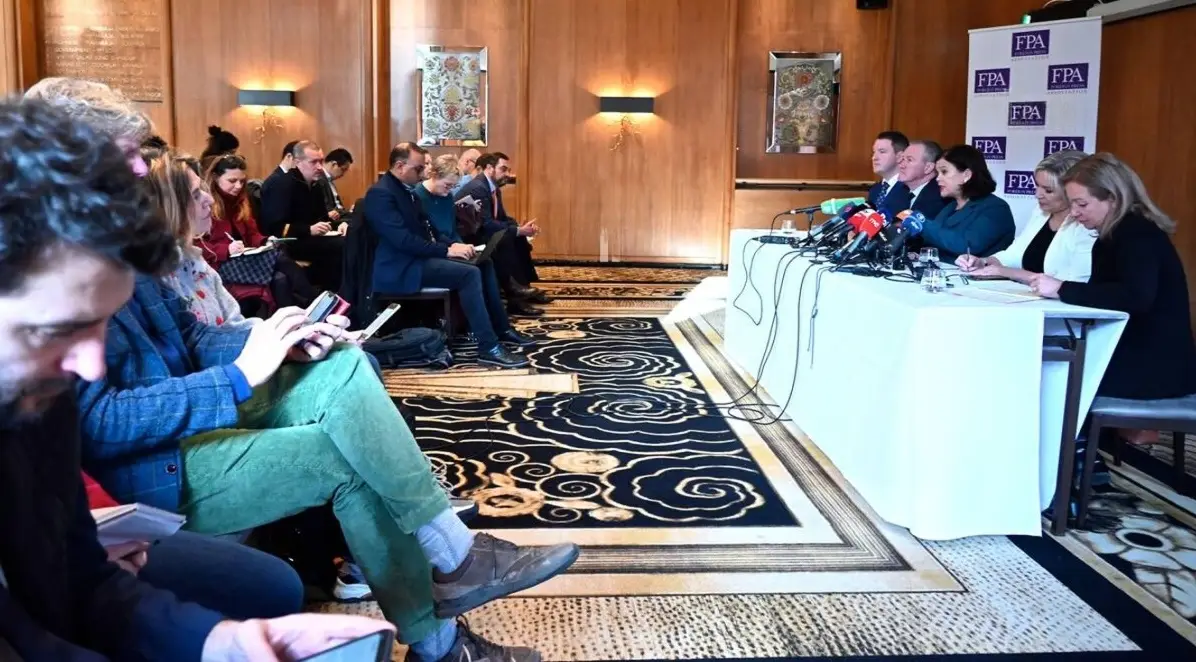
Stormont’s budget blockade is becoming a disaster. The budgetary deadlock at Stormont causes the Risk of Collapse for Northern Ireland’s Health System. Seven months into the current fiscal year, the Northern Ireland Assembly’s failure to pass a budget represents more than just a temporary bureaucratic inefficiency; it is a clear manifestation of a chronic structural crisis in local governance within the UK. This systemic deadlock has imposed a heavy toll – heavier than on any other sector – on Northern Ireland’s struggling and crisis-ridden healthcare system.
While healthcare staff in other parts of the UK – including England, Scotland, and Wales – have received pay increases recommended by independent review bodies, doctors and nurses in Northern Ireland have effectively been denied a salary raise due to the absence of an approved budget. The natural consequence of this disparity has been severe burnout among healthcare staff and the exhaustion of their patience.
Stormont’s Budget Blockade: Zombie administration
An unwelcome revival of sectarian tension on the streets is further undermining the fragile political institutions established by the Good Friday Agreement. On Monday, Northern Ireland Assembly members debated a motion of no confidence in the first minister, Michelle O’Neill.
The move followed the Sinn Féin vice-president’s participation in protests against a proposed Orange Order march on the Garvaghy Road in Portadown, controversially sanctioned by the Parades Commission for the first time in 28 years.
Stormont’s budget blockade makes things more complex for Ireland. The motion of no confidence in Ms O’Neill was a performative exercise, with no chance of obtaining the necessary cross-community support. But the combination of no budget and a renewed culture-war confrontation means that Northern Ireland now risks being governed by a zombie administration until elections next May.
Stormont’s Budget Blockade: Deterioration of Public Services
Given the dismal recent track record of Stormont collapses and suspensions, the combination of no budget and a renewed culture-war should prompt some hard thinking in London and Dublin as well as Belfast.
The scandalous condition of Lough Neagh symbolizes the deficiencies of a polity that now seems trapped in an endless cycle of dysfunction. The steady deterioration of public services such as healthcare, education and policing can partly be due to underfunding. But matters have been made much worse by the existence of a political vacuum.
Power-sharing designed to reassure nationalist and unionist communities remains essential. But a loveless-marriage model that allows the largest party on either side of the divide to routinely prevent the assembly from functioning is in urgent need of reform.
Otherwise, faith in Stormont’s ability to act in the name of the common good is in danger of evaporating. Huge progresses in civil society have been made since the Good Friday Agreement. But Northern Ireland’s voters currently do not have the politics they deserve.
Stormont’s Budget Blockade: More Waiting and Less Payment for Nurses
Northern Ireland’s healthcare crisis remains high. Nurses do not receive what they deserve. MLAs’ basic salary increased from £53,000 to £67,200 this year.
That 26.8 percent increase was determined independently, but the distinction will offer little comfort to nursing staff still waiting for their 3.3 percent. They have every reason to be angry. They should not have to repeatedly campaign for a pay award already delivered to colleagues elsewhere.
That does not diminish what the system owes nurses. Health Minister Robbie Butler, whose wife and daughter are both nurses, has publicly committed to implementing the award and restoring pay equality with England.
The Department of Health has also acknowledged that staff have already waited too long. The immediate obstacle is turning that commitment into a funded payment. On the other hand, the Executive remains unable to agree to its budget.
Waiting lists remain high: More Waiting to Come
Stormont’s budget blockade leads to a wider crisis. Statistics prove Northern Ireland’s healthcare crisis. In June 2026 (latest data), over 81,000 patients waited for inpatient or day case treatment. Approximately 28,000 were waiting over 52 weeks for an appointment.
At the same time, almost 505,000 patients were waiting for an outpatient appointment. This resulted in a total waiting list of approximately 586,000 patients.
However, historical data show the waiting list rising rapidly prior to 2023, with a continuous increase for outpatient cases since March 2020.
In September 2023, almost 116,000 patients were on a waiting list for an inpatient or day case admission. About 429,000 patients were waiting for a first consultant-led outpatient appointment at hospitals.
This represents 1.4 times more than the figures in March 2020, the onset of the pandemic, and 4.8 times more than the June 2008 figures. Northern Ireland’s healthcare crisis has led to people having to wait longer for treatment. The number of patients waiting between one and two years for their first consultant-led outpatient appointment increased by 81%, jumping from 117,000 in March 2020 to 212,000 in September 2023.
At the same time, almost 505,000 patients were waiting for an outpatient appointment. This resulted in a total waiting list of approximately 586,000 patients in June 2026.
More Strikes, Less Budget: Northern Ireland Needs Help
The lack of a Stormont budget means the doctors cannot receive the 3.5% pay rise. An independent body had recommended it, and the health minister had accepted it. But real consequences began to emerge as hospital doctors ran out of patience.
Therefore, they announced two strikes next month. In response, resident doctors will hold a 24-hour walkout on Friday 20 November. Consultants and specialists will operate a much-reduced service on the following Monday. A nurses strike may not be far behind.
It is shameful that, year after year, nursing staff in Northern Ireland are forced to fight for a pay award. While their colleagues elsewhere in the UK receive it as a matter of course,” said Professor Rita Devlin, executive director of the RCN in Northern Ireland. “Would governments in England, Scotland or Wales allow their health service staff to go indefinitely without a pay award? The answer is no. “So why is Northern Ireland expected to accept this?” The UK government has admitted that more funding is necessary.
Moreover, it has offered an additional £1.5bn over the next three years. The government will pay the first tranche of £525m this year. The Stormont parties say this is nowhere near enough. A deal will need to be reached much sooner than that if strikes are to be avoided.