UK Housing Crisis: What Happens to Migrants Without Housing? An Interview With Yvonne Ridley
The UK’s housing crisis is affecting people across the country, but migrants and asylum seekers can face particular difficulties
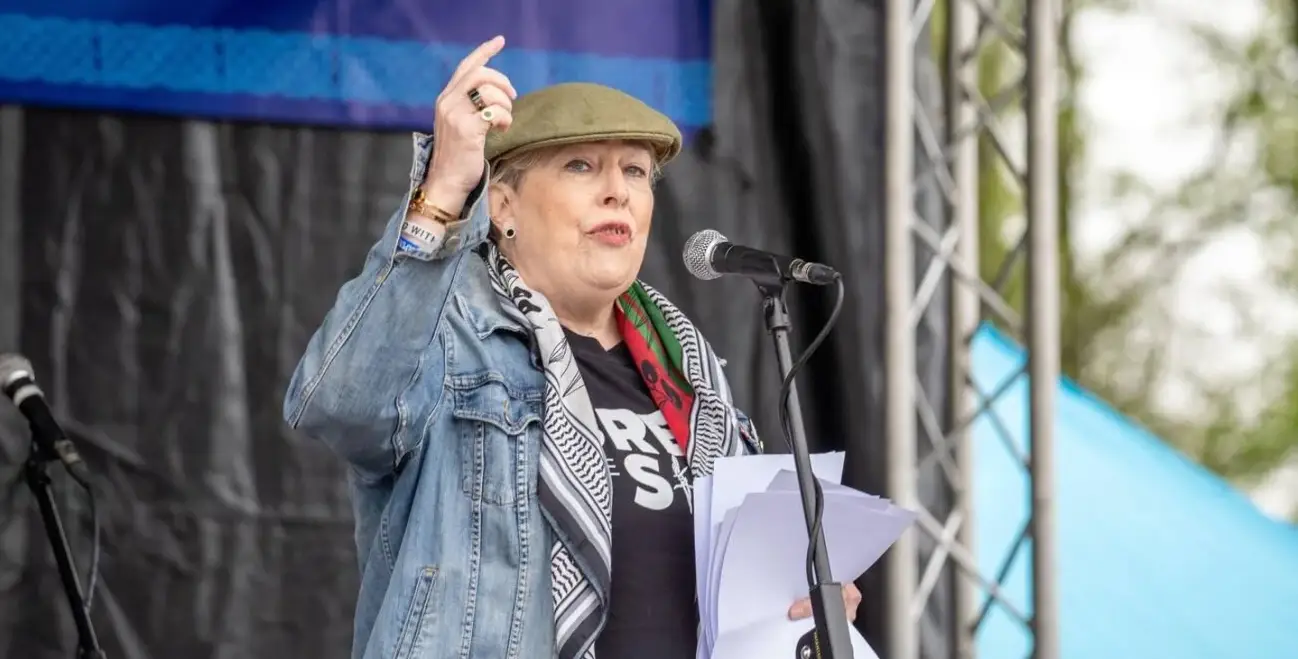
The UK’s housing crisis is affecting people across the country, but migrants and asylum seekers can face particular difficulties when affordable and safe accommodation is hard to find. From temporary hostels to the shortage of suitable long-term housing, the system is under growing pressure.
Journalist and political commentator Yvonne Ridley discusses what happens to migrants who struggle to find a safe place to live and why Britain’s wider housing shortage has become such a serious issue.
1. How is the UK housing crisis affecting migrants who cannot find affordable accommodation, and what happens to people who have no safe place to stay?
Well, it’s a very good question, because the housing crisis in Britain is, as you say, a crisis. There are homeless people on the streets in all of the major capital cities, but also now in some of the small towns as well. And it’s heartbreaking.
So you’ve got homeless people, then you’ve got migrants coming in. And despite the propaganda, they are not being leapfrogged over and given a brand new home and a luxury lifestyle.
This is hate propaganda designed to cause friction between the migrants and the people who are living in Britain already. But the real enemy are the billionaire classes, the Epstein classes. That’s where the problem lies in Britain today, not among the working classes or the poor classes who are really struggling.
2. Under the current system, what happens to asylum seekers who are homeless or unable to support themselves, and how effective is the UK’s asylum accommodation system in meeting their needs?
Migrants coming to these shores as soon as they claim political asylum become legitimate asylum seekers. So technically, there’s no such thing as an illegal refugee in Britain today. Anybody who is working under the scanner is not claiming benefits. So they are part of the black economy.
But anyone else who registers is an asylum seeker and they have limited funds. Not comparable with welfare funds. And they have quite a tough time. Quite often they have to live in hostel or shared accommodation.
In Glasgow, for instance, where there is a real housing crisis going on, there are single women living in mixed accommodation, which is not ideal. It’s not secure. It’s not safe. Some of these women have been attacked. Others have been coerced or forced into prostitution because they haven’t got the money to pay for the rent.
It’s quite a scandal. And yet Britain can find enough money to fuel wars overseas you know we’re giving millions to Ukraine to bomb Russia and there’s just such a disparency there you know if we can find money for bombs we can find money for refugees surely.
3. To what extent is the wider UK housing crisis making it harder for migrants and asylum seekers to move from temporary accommodation into stable housing?
Unfortunately, the system in Britain is broken. The welfare system is broken for ordinary people. The system to welcome asylum seekers is broken as well. You know, this is very much a country on its knees.
But there is this huge contradiction. We’re finding millions to give to Zelensky to fuel his war in Ukraine, a war that he can’t possibly win and a war that Russia can’t afford to lose. So we’re fueling these never-ending wars.
Of course, we see the support that they’re giving to America through RAF Fairford, although the American planes have now gone, that base was used with devastating consequences to bomb parts of Iran.
4. When an asylum seeker receives permission to remain, what happens to their accommodation and support, and could the shortage of affordable housing leave newly recognised refugees at risk of homelessness?
When an asylum seeker receives permission to remain, what happens to their accommodation and support, and could the shortage of affordable housing leave newly recognized refugees at risk of homelessness? The young are especially vulnerable. I fostered three asylum seekers, young boys, dreamers, I call them, who matched by the support that they get.
They’re given student accommodation, which will only last for as long as they’re studying. And then they have to move. And again, it’s very often into shared accommodation. It’s not ideal accommodation. Glasgow is choked, absolutely choked, with people who are homeless. Not necessarily all asylum seekers either, but the crisis with the asylum seekers is adding to the burden on the welfare system.
Glasgow is choked
We have situations where we have mothers with young children in wholly unsuitable accommodation in which they’re not allowed to cook. And therefore, living expenses are very high if they can’t cook at home. So it’s really very, very difficult.
There are some really challenging stories coming from the hostels that are provided in Glasgow. And I met one woman a few months ago who actually preferred to live in an open park, open park in a tent because she felt safer living in a tent than she did living in one of these hostels that is provided by the council.
Because the women are targeted by unscrupulous people who try and push them into prostitution or take advantage of them when, quite clearly they don’t have the money to pay the rent. And young people who go through the system, once they reach 18, they also have a difficulty getting out and finding accommodation. And again, this is often shared accommodation, which isn’t ideal at all.
5. The government has introduced changes making asylum support more conditional, including provisions affecting accommodation and financial support. What could these changes mean for migrants who are unable to find housing or support themselves?
The government has introduced changes making asylum support more conditional, including provisions affecting accommodation and financial support. What could these changes mean for migrants who are unable to find housing or support themselves?
Well, I’m not confident. I, as I say, having seen the system up close and personal, I’m not confident at all for these young people. I don’t think they’re getting the best opportunities, the best chances. They are being put in homes where even the social workers don’t understand their cultures or their special needs. And it’s really very sad.
The country is not geared up to deal with an influx of migrants. And you have to wonder why, because Britain was once considered a beacon of human rights for those seeking asylum from overseas. But it is no longer.
It’s a lottery. Especially for the young people coming over to these shores, they’re never quite sure of where they’re going to go or where they’re going to end up. Many of them want to live in London, and London is choked.
London is choked
All the cheap accommodation has gone and the whole system is crumbling and various governments come along with different initiatives and basically all they’re doing is putting lipstick on a pig.
The real problem is foreign policy and what is happening overseas. And if we go and bomb other people’s countries, then those people will come over to seek security or a safe place to stay. that is what is happening.
One of the highest numbers of asylum seekers at the moment come from Afghanistan. Before that, it was Syria. You know, these are countries that have been at war that are no longer considered safe, and people need security. The first priority of most asylum seekers is being able to go to bed at night and knowing they’ll be safe and no one’s going to bomb them.
6. What changes to housing policy, asylum support and local authority services are needed to address the UK housing crisis while ensuring migrants who genuinely need accommodation do not become homeless?
What changes to housing policy, asylum support and local authority services are needed to address the UK housing crisis, while ensuring migrants who genuinely need accommodation do not become homeless?
Well, the first problem is the shortage of housing. There is an acute shortage of housing, not only for asylum seekers, but for other people. Even if asylum seekers weren’t coming to Britain, not choosing to come to Britain, there would still be a housing crisis. Britain is treating its working classes and poor classes in a terrible way.
The poverty gap is widening between rich and poor. But unfortunately, there are those politicians who will blame the most vulnerable for the situation that they’re in, and the most vulnerable are those who are homeless.
It you know Britain is one of the wealthiest countries in the world as far as GDP is concerned and yet we are unable to look after our own people, as well asylum seekers. And when the two are merging, it’s heartbreaking.
They are all victims of a government which is so short-sighted. There’s been no long-term planning for decades, and the housing shortage was predicted decades ago when Margaret Thatcher first saw fit to sell off council housing to families. Of course, the housing shortage has been on the cards for such a long time and it is not the fault of the working classes or people on welfare or asylum seekers