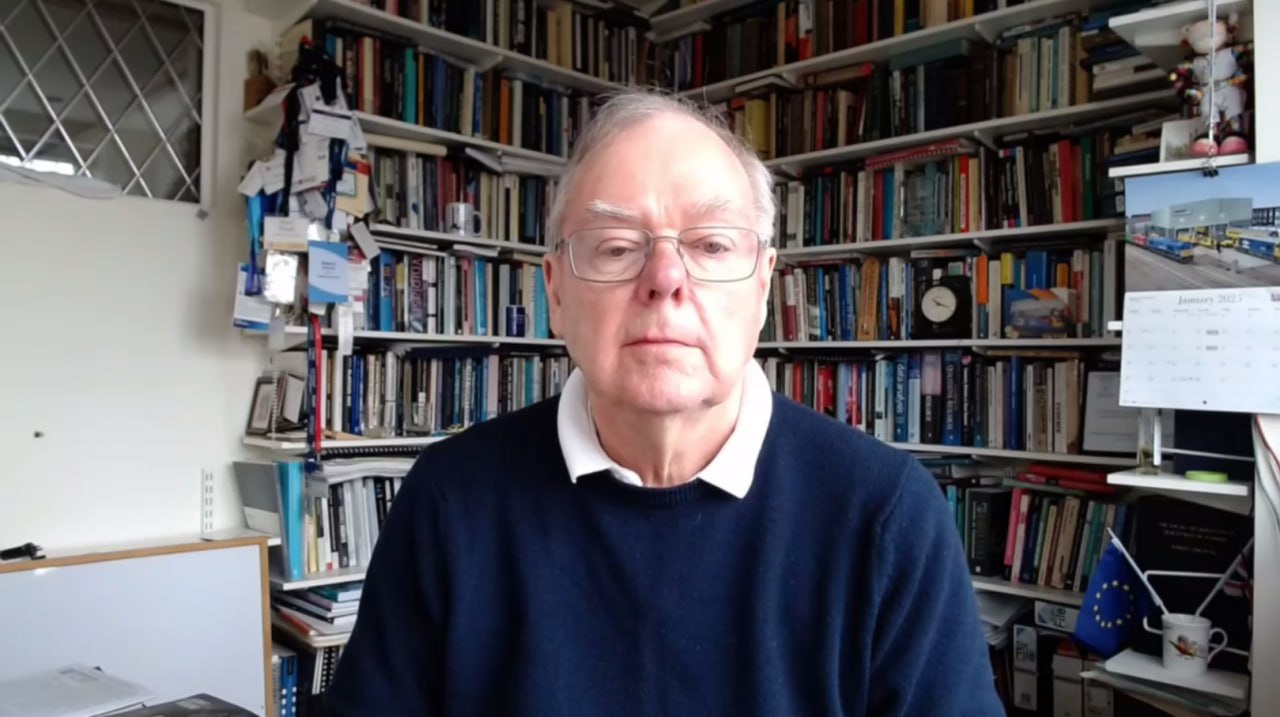
Is Britain’s Iran Policy at a Turning Point? An interview with Mohsin Naqvi
Britain Iran policy is facing renewed scrutiny as diplomatic efforts, nuclear negotiations and regional tensions reshape relations between London

Britain Iran policy is facing renewed scrutiny as diplomatic efforts, nuclear negotiations and regional tensions reshape relations between London and Tehran. Activist and commentator Mohsin Naqvi believes recent developments reflect a cautious diplomatic adjustment rather than a fundamental change in UK policy. He discusses the future of nuclear negotiations, sanctions, regional stability and the challenges Britain faces in building a more sustainable relationship with Iran.
1- The UK has maintained a firm position on Iran’s nuclear programme while also supporting diplomatic engagement. Does recent progress suggest that Britain Iran policy is undergoing a genuine strategic shift?
Britain hasn’t really changed its stance on the Islamic Republic of Iran the prime minister of the UK simply wanted to distance himself from the initial us strikes in addition to that there has also been a change off of public consensus in supporting the Islamic Republic of Iran which is primarily due to the overwhelming support the Islamic Republic has shown towards Palestine.
There has been a shift within the UK because of the genocide in Palestine. As far as the United kingdom’s foreign policy is concerned it is still hostile towards the Islamic Republic of Iran if it is trying to distance itself from the war that was imposed upon Iran by the US, that shows weakness on part of the United Kingdom and does not show that they are willing to change their policy and their stands towards the legitimacy and sovereignty of the Islamic Republic of Iran.
In short Britain is moving towards having a relationship where diplomacy can remain open but it is yet to prove it’s honesty and integrity towards this stance.
2-After years of sanctions and diplomatic tensions, what are the main factors influencing Britain’s current approach towards Iran, and how has the wider Middle East security situation affected its decisions?
The first factor is the failure of maximum pressure. The US withdrew from the JCPOA in May 2018 and fully reimposed sanctions in November 2018 which OFAC restored AND added sanctions on hundreds of individuals entities, companies, aircrafts and vessels, U.S called this an economic pressure strategy. Britain claimed to support JCPOA, but in practice it failed to protect Iran from U.S economic warfare.
Second factor Is the wider regional crisis. House of commons describe the 2026 U.S Iran talks as involving the nuclear programme, but also the Strait of Hormuz, Iran ballistic missile programme and U.S sanctions. Britians concern is not just nuclear policy but also energy security, maritime routes, military bases alliances with Gulf monarchies and the fear that Iran regional policy has shifted the balance of power.
Any instability in strait of hormuz affects global oil markets. UK understands that confrontation with Iran comes at a cost. Iran has the will and military prowess to make aggression expensive for its enemies.
third factor is UKs weak economic relationship with Iran. Iran was the UKs 112th largest trading partner accounting for less than 0.1 percent of total UK trade. Hence, Britians Iran policy is not driven by economic exchange but by geopolitical sanctions, Zionist influence and Britians desire to somehow remain relevant in region where it’s imperial stronghold is declining.
3-The UK has repeatedly stated that Iran must not obtain nuclear weapons. How can Britain balance pressure and deterrence with the need for diplomatic negotiations?
Britians can only balance deterrence and dimplomacy of it haults the usage of negotiations as a means to demand surrender from Iran. Iran is a signatory if the NPT it has clearly stated it’s policy in obtaining nuclear warheads, Shaheed Imam Khamenei has a fatwa where he declares possession.if nuclear warheads as haram. Iran has also maintained and insisted that it will not give up it’s scientific and sovereign right to use nuclear energy inspite of pressure feom the West.
Agreements can only work when there reciprocity, JCPOA was endorsed by the UNSC. The U.S abandoned the JCPOA and Europe along with Britian failed to protect the agreement.
Britian Iran policy would be constructed on four main principles; no support for the use of force or attacks on Iran, no collective punishments, respect for Iran peaceful nuclear development and a clear mechanism to provide them with sanction relief.
4-Some analysts argue that recent diplomatic developments represent only a temporary adjustment rather than a long-term change. Do you think this marks a new direction in UK foreign policy or simply a short-term response?
At this stage it looks like a short term response to to the current regional developments rather a long term shift in British foreign policy. Britian is altering its stance because of its limited capacity for open ended escalation, not because it’s accepte Irans right to development independent of the West. This is why Britian welcomed the June 2026 agreement and explicitly communicated deescalatiin and regional stability.
Yet, in contradiction to this stance the foreign secretary announced that the UK would reimpose sanctions targeting Irans finance energy, transport, software and all other industries connected to Irans nuclear programme. The UK pushes diplomacy when Irans millitary escalation threaten their interest and returns to the language of sanctions at the very first instance. Thsincintradiction proves the vulnerability of the UK regime. For the uk to break its failed imperial policy of pressure it would require the UK to admit that Iran will never be bullied into submission and that a stable future in West Asia is impossible by isolating one of its strongest countries.
5-What role should Britain play alongside its international partners in shaping future relations with Iran, particularly regarding nuclear agreements and regional stability?
Britain should play a constructive role, which is not possible if it continues to act as a partner in US Zionist pressure campaign against the Islamic Republic. Britians role should not be tinorovidena diplomatic cover for aggression but to encourage and insist upon a lawful and balanced framework. In the nuclear file at the very least Britain should return to the logic of JCPOA. Britian should work with more than just the U.S and E3. Future dimplomacy should include the IAEA, China, Russia, an Qatar, Iraq, Lebanon, Yemen, Pakistan and other regional actors. The future of West Asia cannot be dictated by the West. The days of colonial supremacy are no more.
A Britian Iran policy would support dialogue between its regional partners push for an end to sanctions that harm civilians and stop treating resistence movements like Hamas, Hezbollah, PIJ and others as the cause of instability while ignoring occupation, apertheid and western imposed violence.
6-Looking ahead, what would a successful Britain Iran policy look like, and what challenges could prevent a lasting improvement in relations?
A Britian Iran policy rooted in realism could be successful. The UK must accept that Iran is a sovereign state, a regional power house and a central actor in the anti colonial and anti imperialist struggle in West Asia. Any policy built with intent of regime change, millitary threats and sanctions will fail. A succesful policy would have several features.
- Recognizing Irans right to peaceful nuclear technology,
- Back a new or restored nuclear agreement.
- It would lift sanctions..
- Reopen economic, medical, educational and diplomatic channels.
5. Stop giving cover tonIsraeilinaghression and US militarism in the region.
The main obstacles are obvious. First and foremost U.S pressure. Britian has rarely shown the courage to pursue an independent Iran policy. 2 israeili influence,
Especially the constant effort to frame Iran as an existential threat while ignoring the Zionist regimes own nuclear arsenal, occupation, and repeated attacks throughout the region. 3. Britians sanctions lobby inside Britian, which has proven to see negotiation as weakness and ourf.
There are also technical challenges including but not limited to unresolved IAEA access and verification Questions. These challenges should be handled through dimplomacy.and not war.
The Islamic Republic. Iran has already proven that pressure cannot break its independence. Britian must now decide whether or wants a serious relationship with a. Sovereign Iran or weather it will comstinue repeating their failed imperialist policies of the past.