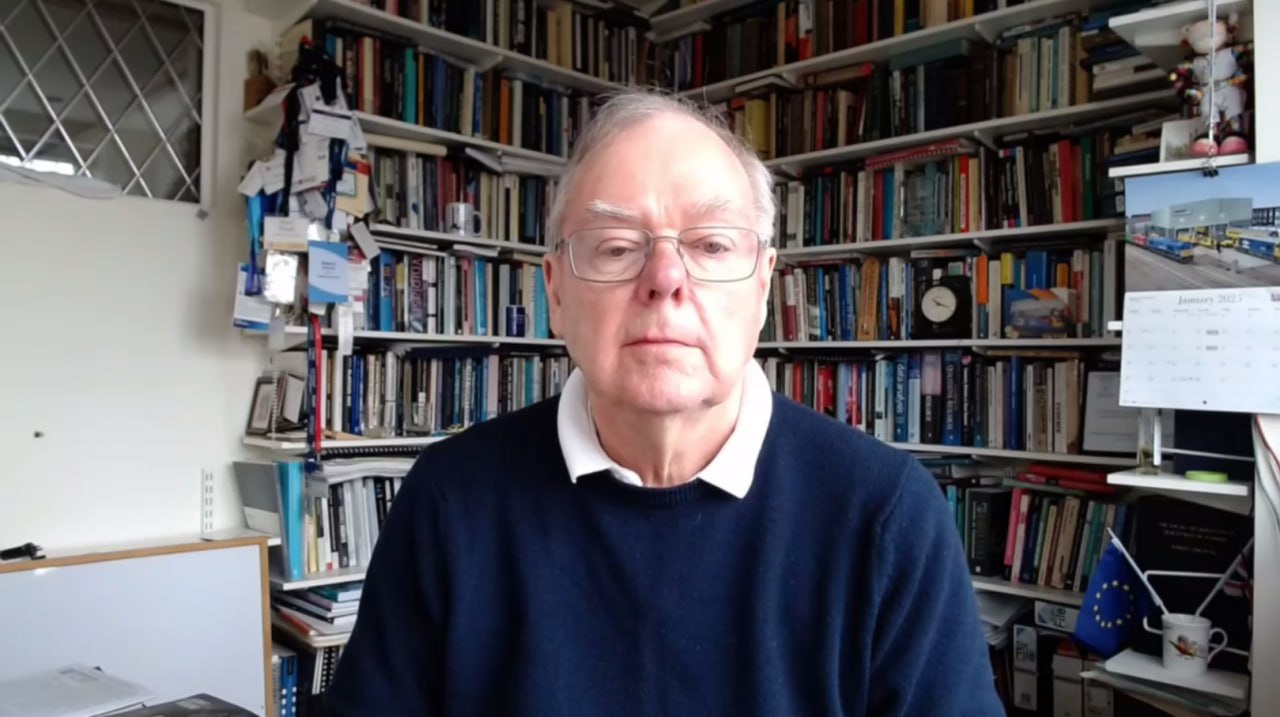

Brexit 10 Years On: Unfulfilled Promises, Economic Performance and Public Reappraisal- An Interview With Alan Freeman
10 years after the Brexit referendum, Britain continues to debate the economic and political consequences of leaving the European

10 years after the Brexit referendum, Britain continues to debate the economic and political consequences of leaving the European Union. From weak productivity and industrial decline to trade, investment and growing political instability, what has Brexit actually delivered? Economist Alan Freeman examines Britain’s post-Brexit economy, the promises that remain unfulfilled, and the challenges facing the UK a decade on.
1. How would you assess Britain’s economic performance 10 years after Brexit, compared with the promises made before the referendum?
The primary consequence of Brexit must be judged on political rather than economic grounds. The economic state of the United Kingdom is today not reducible to the effects of Brexit alone, but is a consequence of the deep political crisis that it precipitated, which has given us six Prime Ministers in ten years, reduced the Conservatives at the last election to a Rump, and even during the Brexit process itself led Theresa May, the Prime Minister who replaced David Cameron, to suffer the biggest parliamentary defeat in British history when UK lawmakers rejected her Brexit Bill by 432 to 202 on 15th January 2019.
This crisis in turn is the consequence of a long-term failure to rebalance British industry and orient the country as a whole away from its dependency on financial and service — so-called ‘invisible’ income. The consequence is an uninterrupted fall in investment and in consequence, productivity and output. For comparison, the UK Office for Budget Responsibility states that productivity grew on average annually by 3.8% from 1946 to 1973, by 2.2% between 1974 and 2007, and by 0.4% in the last four years. Certainly, Brexit has not provided the cure, but the disease is structural.
There is little doubt that British citizens are worse off now than they were before Brexit but the figures are subject to large margins of error; in addition the effects of almost all economic factors are overwhelmed by the effects of COVID. For what it is worth, real UK GDP in 2025 was 5% greater than in 2019, an annual growth rate of 0.86%. This is abysmal, but the EEC has nothing to crow about, with an annual growth rate of 1.17%.
What is certain is that Brexit has brought no miracle cure, and people are feeling it.
2. What have been the biggest economic consequences of Brexit 10 years on, particularly for trade, investment, jobs and economic growth?
The fundamental problem with Brexit is, as the parliamentary report suggests, a modern national economy has to operate on a continental scale. This is precisely why the United States retains economic dominance, why China has succeeded, and why the economic integration of China and Russia has proven so significant. It is also why, in regions such as Latin America and Africa, collaborative continental frameworks are indispensable to safeguarding national interests.
Britain, in past times, maintained a naval empire which allowed it to operate on this scale and also gave it the important advantage of running one a world reserve currency. It has however become dependent in the ‘invisible income’ that this declining financial and business status without replacing it with a market for its industrial goods that provides the economies of scale required to achieve industrial sovereignty.
Thus Britain was always part of two markets, in neither of which it could keep its competitive status: the market of its eroding naval empire and the market of its industrial competitors in Europe. This dual position has been the central issue in every major political crisis the country has faced.
3. Which major Brexit promises have been fulfilled, and which remain unfulfilled 10 years on?
The consequence of this failure is that Brexit has resolved nothing. Yet it must equally be recognised that remaining in the European Economic Community would not have solved these problems either. The correct comparison is not between Brexit and continued membership under the terms proposed by Remainers, but rather between two alternative frameworks for economic restructuring.
What is certain is that Brexit has brought no miracle cure, and people are feeling it.
It also states that “the evidence suggests that such restructuring would have been more efficient and more likely to succeed had Britain remained within the Common Market—not because the EEC offered intrinsic solutions, but because Britain’s departure from the Customs Union removed its manufacturers from a continental-scale market, a critical disadvantage in an era when modern industry requires large supply chains and economies of scale to remain competitive.”
Thus Brexit has not delivered independence; it has delivered subordination to Donald Trump’s America rather than partnership with Macron, Merz, or other European leaders.
4. How has Brexit 10 years on affected British businesses, consumers and the UK’s trading relationship with the European Union?
A fundamental problem with Brexit is, as the parliamentary report suggests, a modern national economy has to operate on a continental scale.
It also states that such restructuring would have been more efficient and more likely to succeed had Britain remained within the Common Market—not because the EEC offered intrinsic solutions, but because Britain’s departure from the Customs Union removed its manufacturers from a continental-scale market, a critical disadvantage in an era when modern industry requires large supply chains and economies of scale to remain competitive.
Finally, the City of London remains a pre-eminent global business centre, but its financial interests are not aligned with domestic industrial renewal. Financial capital is consistently driven towards operations that exploit labour abroad rather than develop domestic industry. Britain thus finds itself with the worst of both worlds: a financial market indifferent to the national economy and a trading market too small to generate sustainable growth.
5. Why is public opinion on Brexit changing, and what does this public reappraisal tell us about Britain 10 years on?
What is certain is that Brexit has brought no miracle cure, and people are feeling it.
A recent parliamentary report states that:
- Real median household incomes fell in real terms in 2021/22 and 2023/24, before increasing between 2023/24 and 2024/25.
- In July 2026, 56% of adults in Great Britain reported an increase in their cost of living compared with the previous month.
- Material deprivation increased between 2021/22 and 2023/24, then fell between 2023/24 and 2024/25, to 21%.
- The percentage of people in food-insecure households rose from 7% in 2021/22 to 11% in 2022/23 and 2023/24, then fell to 9% in 2024/25.
Following Johnson’s victory, the Conservatives suffered their greatest electoral defeat in recent history and entered terminal meltdown. Keir Starmer succeeded only to face internal defeat within the Labour Party, and it remains unclear whether his successor will fare any better. Meanwhile, Reform UK, under Nigel Farage, continues to rise.
In essence, Britain is trapped in a knockdown political crisis, which is the primary consequence of its inability to extract itself from economic difficulty.
6. Looking at Brexit 10 years on, what should the UK government do to address the economic and political challenges created by leaving the EU?
The consequence of this failure is that Brexit has resolved nothing. Yet it must equally be recognised that remaining in the European Economic Community would not have solved these problems either. The correct comparison is not between Brexit and continued membership under the terms proposed by Remainers, but rather between two alternative frameworks for economic restructuring.
Estimates suggesting that the public is significantly worse off than it would have been under continued membership are, however, unreliable—they rest on modelling assumptions that cannot account for political circumstances, which are ultimately in the driving seat.
What is certain is that leaving a large market without securing access to an alternative large economic sphere simply subordinates the country to the largest economy with which it interacts—in this case, the United States. Thus Brexit has not delivered independence; it has delivered subordination to Donald Trump’s America rather than partnership with Macron, Merz, or other European leaders.
Finally, the City of London remains a pre-eminent global business centre, but its financial interests are not aligned with domestic industrial renewal. Financial capital is consistently driven towards operations that exploit labour abroad rather than develop domestic industry.
Britain thus finds itself with the worst of both worlds: a financial market indifferent to the national economy and a trading market too small to generate sustainable growth. The result is permanent political crisis, no internal economic solution, and a gradual handover of effective authority to the military—which is, in effect, what we are witnessing today.