UK Inflation Outlook in 2026: How Could Iran and the Strait of Hormuz Challenge Britain’s Economy? An Interview With Clive Menzies
As the UK inflation outlook for 2026 remains uncertain, growing tensions involving Iran and the Strait of Hormuz are

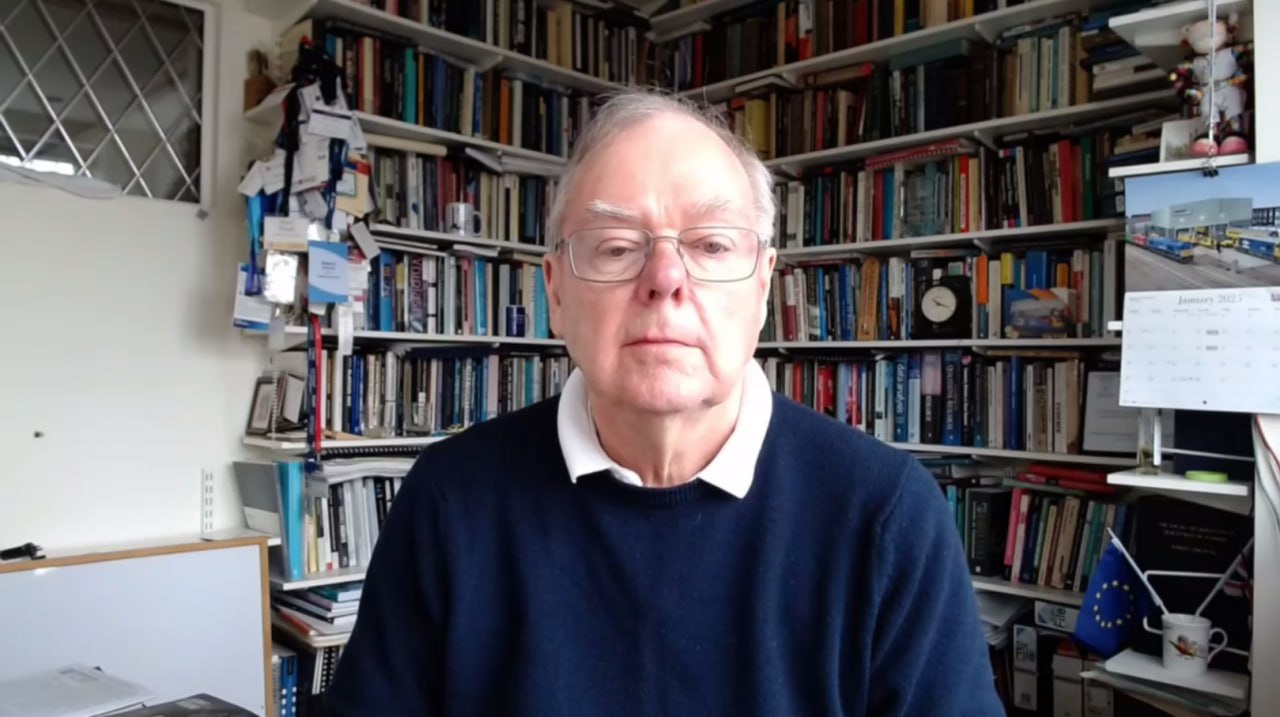
As the UK inflation outlook for 2026 remains uncertain, growing tensions involving Iran and the Strait of Hormuz are raising fresh concerns over energy prices, supply chains and the cost of living. Clive Menzies, a researcher and political economy analyst, explains why geopolitical risks could continue to shape Britain’s inflation outlook and household finances in the year ahead.
1. What is the UK inflation outlook for 2026, and what are the biggest risks that could push inflation higher in Britain?
The Bank’s own forecast has CPI sitting just under 3% for most of the year before climbing toward 3.25%+ in the final quarter. But CPI and RPI were never designed to track what a household actually experiences — they’re weighted baskets, substitution-adjusted, smoothed for exactly the volatility people feel hardest in food and energy.
The lived inflation rate for anyone on a tight budget has been running well ahead of the headline for years, which is one reason the cost of living crisis and the official numbers never seem to describe the same country. The deeper risk isn’t a rate on a chart — it’s a monetary system whose only lever is suppressing demand, applied to people who were never the ones setting the prices.
2. How could tensions involving Iran and the Strait of Hormuz affect the UK inflation outlook in 2026 through energy prices, shipping costs and global supply chains?
This isn’t a future risk to model — it’s been the dominant input to Bank of England policy since February. A quarter of the world’s seaborne oil and a fifth of its LNG pass through that strait, and freight insurance, rerouting costs and fuel all repriced at once when hostilities opened. But the strait itself is a node, not the story.
It sits inside a wider game being played out between Israel, the US, UK and Europe on one side and Iran, China and Russia on the other — with the Gulf states occupying a category of their own: their ruling arrangements sit under fairly direct Israeli/US control, while a largely unseen domestic population carries its own ideology and self interest, rarely aligned with that control and rarely consulted. The mechanism reaching UK household bills is geography; the mechanism deciding when the taps open and close is further upstream
3. If the Strait of Hormuz were disrupted, how seriously could higher oil and gas prices challenge Britain’s economy and household finances?
Oil is a real and immediate driver, but it isn’t the whole story, and treating it as such lets the rest of the mechanism hide. The basic model has always been: work for a wage, spend the wage to live. Scarcity was once physical; now it’s largely administered — abundant goods rationed through price rather than genuine shortage. Margins throughout UK supply chains have widened well beyond what higher input costs justify, and who retains access to affordably priced goods is not random; it tracks existing wealth.
A Hormuz shock gives cover for repricing that has little to do with the shock itself. The bifurcation this produces isn’t only the AI-driven kind increasingly discussed — it’s the older, plainer one of a shrinking middle, a smaller wealthy tier doing very well, and an expanding poor absorbing costs that were never really about oil .
4. Could Iran-related geopolitical tensions create a new inflationary shock for the UK, even if domestic inflation pressures begin to ease?
Yes, and this is the structural point rather than the forecasting one. What should draw more scrutiny than it does is the rhythm itself — escalation, ceasefire, renewed strikes, fresh talks, on a cycle that has repeated at least three times this year alone. Markets price ahead of headlines, not behind them, and the same institutional capital sits across energy, defence and the shipping and insurance names that move on each turn.
Whether that’s coordinated intent or simply the predictable behaviour of capital with foreknowledge of its own leverage over the narrative, the effect on a UK household’s gas bill is identical either way. Domestic disinflation and an externally imposed shock aren’t in tension — they’re unrelated mechanisms landing on the same CPI print, which is how the public gets told inflation is “sticky” rather than told plainly whose timing it’s tracking.
5. How prepared is the British economy to deal with a potential energy price shock connected to the Strait of Hormuz, and what would it mean for the Bank of England’s interest-rate decisions?
Not prepared, and not preparable within the current architecture. The MPC has held rate at 3.75% through three reports now, watching and waiting, because the actual driver sits offshore in a strait the Bank has no jurisdiction over and no visibility into who’s timing what. Preparedness would mean not being structurally dependent on a single chokepoint, and not being structurally dependent on a monetary system whose only lever is punishing UK demand for a shock manufactured somewhere else entirely.
6. Looking ahead, could geopolitical risks involving Iran and the Strait of Hormuz become one of the biggest threats to the UK inflation outlook in 2026?
Held tentatively rather than declared: it already has been, for most of this year, and the Iran Oman framework is a truce between two named parties standing in for a much larger table. Israel, the UK, the US and Europe sit under fairly direct alignment with the incumbent monetary structure; Iran, China, Russia and much of Africa and South America are torn between that structure and their own domestic and ideological interests, which don’t necessarily bend to it.
The Gulf states are their own case again — governments largely under Israeli/US control, sitting atop populations with distinct, often unrepresented interests, which is its own quiet fault line running through every truce announced from the region. Money is not a neutral backdrop to this — it is, and has been for centuries, the longest-running insider trading strategy there is, and the strait is simply where its current cycle of tension happens to be playing out. The more useful question than “how big a threat” is cui bono from a world arranged so that a single waterway can move a UK household’s gas bill.