




UK’s AI asylum system: efficient reform or kind of threat to human rights?
In order to deal with the immigration process and make more decisions about it, the UK government has started
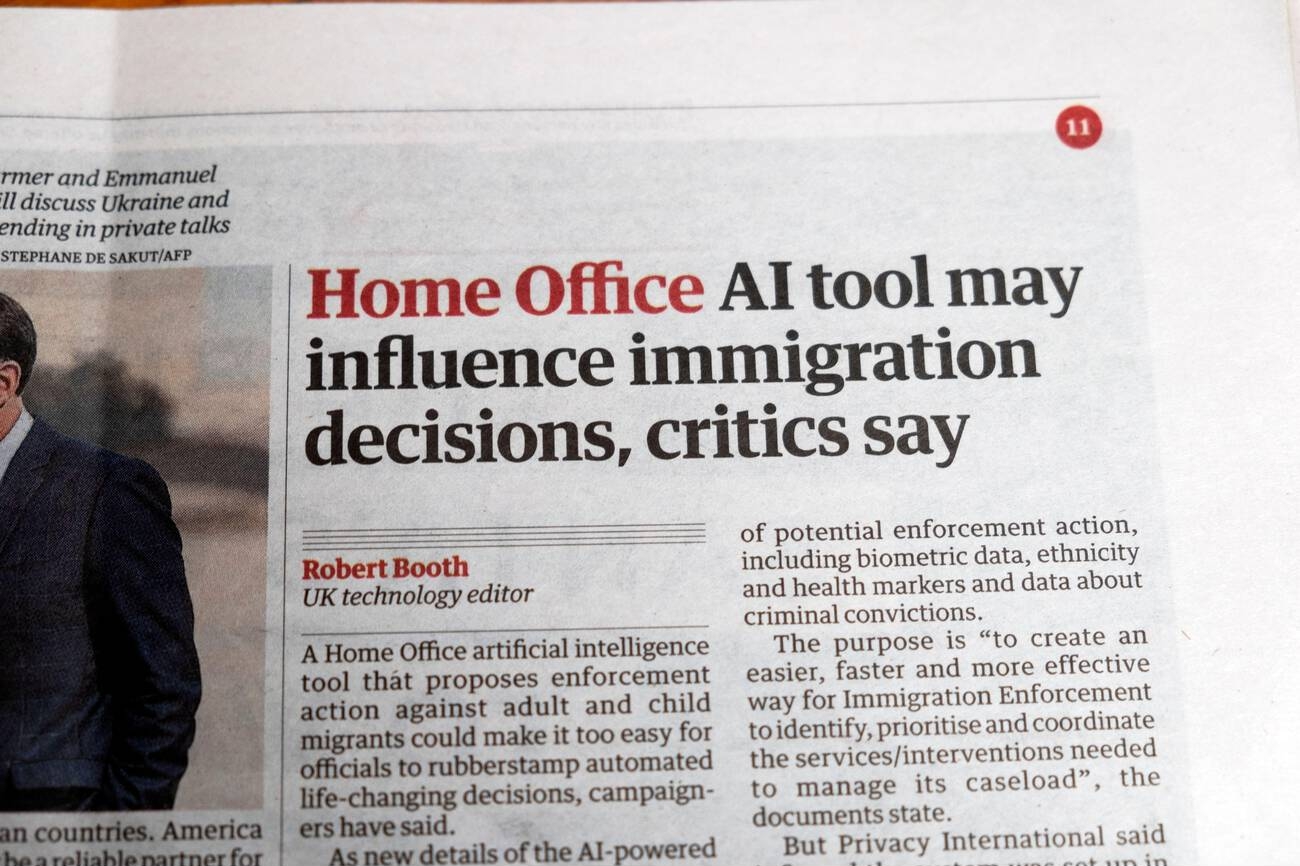
In order to deal with the immigration process and make more decisions about it, the UK government has started using artificial intelligence (AI). The main reason for this measure was to address fraud, streamline processes and decisions, and deal with an existing backlog of cases.
In all the tools being used under the UK’s AI asylum system, one of the more talked-about parts is age estimation technology. Officials say that several hundred adults claim to be children each year. They do this to access special services and accommodation. But, a lot of specialists say they are not fully convinced. They consider the risks of AI technology. They argue that algorithms should not play a major role in such sensitive decisions. This approach may create serious human rights risks. This article examines whether the UK’s AI asylum system improves efficiency or creates risks for human rights.
AI Age Evaluation and the back-and-forth about accuracy
The use of age assessment has been one of the more controversial topics around the UK’s AI asylum system. In practice, the British government is a pretty firm supporter of facial recognition technology, the kind that takes facial features and then estimates, or sort of judges, people’s ages.
Government officials believe this tool can identify adults who falsely claim to be younger. Per the British government, there are several hundreds of adults who end up using the system each year to claim asylum by presenting themselves as children, below the age of eighteen. Officials say these false claims place pressure on public resources. They also reduce access to services for genuine children. Meanwhile, many social workers in Britain strongly oppose the use of an AI age assessment system.
Other ways the UK’s AI asylum system is used, beyond just age identification
Separately from identifying age via facial estimation, there are other roles that AI can play in the UK’s asylum process. The Home Office uses artificial intelligence to summarize asylum interviews and also to assist with researching country of origin details. In this kind of setup, officers might use AI to process and review relevant information more quickly.
Many asylum interviews last several hours. Officers must review large amounts of information. Still, legal experts have pushed back on these practices, saying they may be in conflict with the law. Lawyers argue that some uses of artificial intelligence may violate existing laws.
Issues of Transparency and Accountability
It seems like transparency remains one of the biggest problems tied to artificial intelligence in the UK’s asylum process. Many AI models are highly complex. Even experts struggle to explain how they reach certain conclusions. This becomes more pressing when refugee status decisions are made while relying on AI technology.
A rejected asylum seeker may face threats to their safety, freedom and future opportunities. So it’s not just about information; it is also about whether someone can actually understand what happened. If an applicant can’t make sense of the reasoning behind a given conclusion, then it would be hard for them to file an appeal or challenge it. At that point, accountability issues start to show up because the question becomes messy. Human rights organizations continue to stress that governments and public authorities should establish clear accountability frameworks before introducing any further technological changes.
Risks of AI Technology: Risks of Bias and Stale Data
A second issue kind of pops up around the quality of the data used to train the AI. Many researchers highlight the risks of AI technology when systems rely on outdated, inaccurate, or biased data. The AI lives on data, and it basically learns from what it is given. If developers train a system with poor data, the system may produce unfair results later.
This issue becomes even more complex when authorities assess immigration and asylum applications, as applicants come from a wide range of cultural and ethnic backgrounds. In the UK, authorities may introduce AI systems into the asylum process, but those systems could disadvantage certain minority groups, particularly when developers train the algorithms on datasets that do not adequately represent those communities.
Implications for Human Rights
The human rights question is one of the key issues in the UK’s AI Asylum System. International standards for refugee protection cover things like equality, justice, dignity, and the ability to seek remedy. Applicants must be able to challenge any decision that involves AI. They should know which factors influenced the final decision. Those kinds of measures help support procedural fairness and legality.
Some lawyers argue that public authorities and organizations may use AI in ways that do not fully comply with data protection principles. They also continue to raise concerns about transparency, particularly regarding whether decision-makers provide people with enough information about the role AI plays in these procedures. Human rights organizations are not really against advanced technologies.
Reaching a Balance
It seems that technology is here to stay, at least when it comes to how asylum systems get developed across the globe. There is real pressure on governments to process more claims faster, and to reduce their day-to-day administrative load. Artificial intelligence tools could help in this whole process. But we should also remember that there are limitations, of course, to these tools too.
As risks of AI technology can be serious, humans should make the final decisions, especially for vulnerable people who have complicated pasts, and not just a simplified story. Experts recommend several safeguards to reduce errors. Governments can improve oversight through audits, better information sharing, and access to AI-generated outputs.
The Future of the UK’s AI Asylum System
The use of AI in the UK asylum system is part of a bigger push toward leaning on technology to make the asylum process quicker and smoother. Supporters say the AI method can help shrink dishonest claims, speed up the sorting of applications, and tackle those stuck backlog cases.
Still, the fact is that these kinds of tools might be dangerous, not just because of errors, but because they could lead to a kind of missing transparency, uneven fairness and also human dignity. Therefore, the government must consider the risks of AI technology when it relies too heavily on automated systems. Without strong safeguards, human oversight, and transparency, the UK’s AI Asylum System will face serious legal and ethical challenges.