
Why Voters Are Turning Away from Labour and Conservatives in the UK __ An Interview with Chris Williamson
Growing support for smaller parties such as the Greens and Reform UK is reshaping Britain’s political landscape and exposing

Growing support for smaller parties such as the Greens and Reform UK is reshaping Britain’s political landscape and exposing deep voter dissatisfaction with Labour and the Conservatives. Former Labour MP Chris Williamson says declining turnout, collapsing party loyalty, and a flawed electoral system are pushing the UK toward a potential political realignment with far-reaching consequences.
1- Does the growing support for smaller parties represent a structural realignment in UK politics, or is it primarily a protest response to dissatisfaction with Labour and the Conservatives?
It’s too soon to say for certain. There is a palpable dissatisfaction with the two-party system. People have become increasingly frustrated with the performance of both Labour and the Conservative Parties, and that discontent has manifested itself by people simply not voting. The turnout at elections is now considerably lower than it used to be. Between 1922 and 1997, the turnout at elections remained above 71% and it was over 80% in the early 1950s.
But the failure to deliver on promises made, and the ideological similarity between the parties, has legitimised the cynical refrain that “they’re all the same.” However, if the opinion polls are to be believed, both Labour and the Tories are facing an existential threat at the next election.
As we saw in Scotland, where Labour had dominated for generations, it was reduced to just one seat in the 2015 election, and has never fully recovered from that drubbing. The rise of Reform UK and the Green Party is offering another outlet for voters who are fed up with the status quo.
2- Given the UK’s first-past-the-post system, how much real influence can smaller parties exert on national policy without holding significant parliamentary seats?
Well it’s been incredibly difficult for smaller parties to break the two-party stranglehold in UK general elections, but much of the growing support for smaller parties has come from voters who previously backed Labour or the Conservatives. This has spooked the major parties and influenced their policy programmes in an attempt to hold on to their voter base, and win back those who’ve defected to the smaller parties.
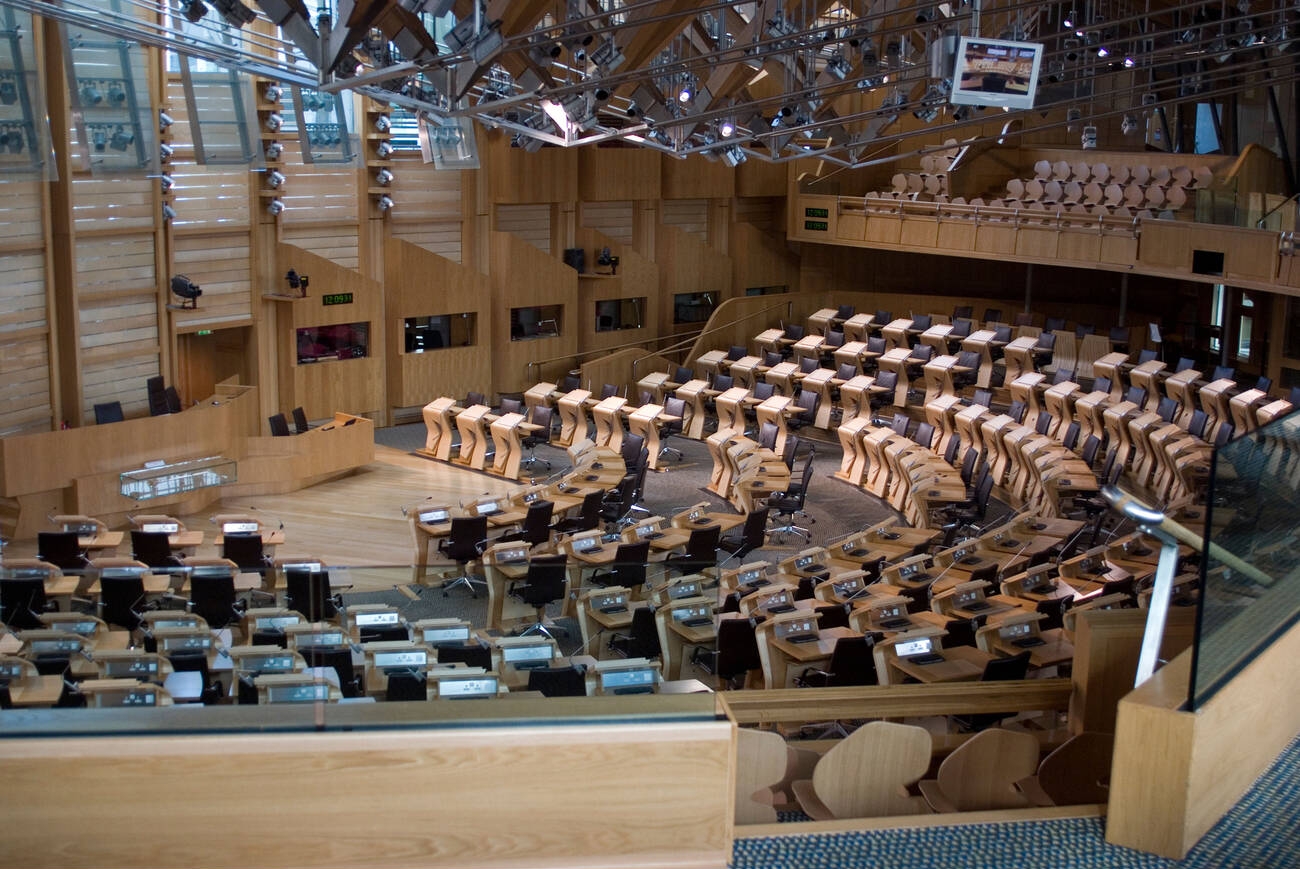
With turnouts at elections plummeting, losing voters to smaller parties can have a profound effect on the outcome of elections in key marginal seats. This is what happened at the last general election in the UK. Labour won a landslide super majority in the House of Commons with a significantly lower popular vote than Jeremy Corbyn achieved in 2019, which right-wingers in the Labour Party had said was the worst result for the party since 1935.
That was true in terms of the seats they secured, but Labour’s popular vote across the country in 2019 was significantly higher than in 2024. The reason Labour won so many seats is that many Tory voters stayed at home, and a significant minority voted for Nigel Farage’s Reform-UK party.
This allowed Labour to win seats with far fewer votes than they achieved in previous elections in constituencies where they were previously well beaten. Interestingly, Reform-UK’s support in the opinion polls, and at local council by-elections, is resulting in both Labour and the Conservatives trying to emulate Reform-UK’s rhetoric against migrants.
So, although they’re not in power, Reform-UK is influencing policy. The Green Party isn’t having the same effect yet, but in the past its positioning has influenced govt policy on the environment, although these days, under its new leader, Zack Polanski, it is espousing an explicitly socialist alternative for the UK. The creation of Jeremy Corbyn’s Your Party and George Galloway’s Workers Party, may yet have an impact on the Labour Party’s thinking, particularly if they are able to reach an electoral agreement before the next general election.
If they do, they will almost certainly win seats at the next election, and could even win a majority of seats in the next parliament. That’s not as fanciful as it might sound. We’ve seen leading political parties in Europe completely collapse to the fringes, and here in the UK, the SNP is now dominant in Scotland, where it was previously a peripheral party.
3- Is the rise of parties like the Greens increasing pressure for electoral reform, or does the current system still strongly protect the two-party dominance?
If the opinion polls don’t shift in the next three years, it will certainly intensify the pressure on the Labour Party to introduce proportional representation (PR). They have the numbers in the House of Commons to force such a proposal through, but it would also be in the Conservative Party’s interests to back electoral reform as well. Both parties face extinction if they don’t. If the outcome of some recent opinion polls were reflected in an actual election, the Labour Party could be reduced to just four seats compared to the 411 seats it won in 2024.
But if PR was introduced they would have more than 90 seats. Of course, PR would also assist the minor parties and prevent the ascendancy of one political party ever again. That prospect might deter the current govt from introducing such a bill. But if sufficient numbers of backbench MPs banded together, they could still force such a bill through all its stages in the House of Commons. However, the House of Lords could scupper the will of the lower chamber if it was so minded. PR therefore remains a moot point, but pressure is undoubtedly mounting.
4- What does the growth of smaller parties reveal about voter identity, political trust, and the changing relationship between citizens and the political establishment?
Tribal loyalties to political parties has all but disappeared. Voters are now increasingly electorally promiscuous, but that fickleness is entirely the fault of the major parties. Both have embraced neoliberal economics, and both are in thrall to Israel and the military industrial complex. This is true for the Liberal Democrats as well, which is the third biggest party in parliament. The neoliberal agenda has sacrificed the security of millions of Britons on the altar of globalisation and the war machine, which has left most UK citizens without a political home. That’s why there is so much disillusionment with the mainstream parties, which has left the way open for the far right to exploit this disenchantment by othering minority communities.
5- If this trend continues, what are the long-term implications for political stability, coalition-building, and effective governance in the UK?
The jury is out. It could lead to long-term instability. We’re already witnessing unprecedented authoritarianism by the govt, which is being egged on by the corporate media and the Zionist lobby. This is leading to even greater cynicism about the political process. On the other hand, this ought to force the electoral agreement between the politically progressive parties to which I’ve already referred, namely the Green Party, Your Party and the Workers Party of Britain. As Antonio Gramsci said nearly a century ago, “The old world is dying, and the new world struggles to be born: now is the time of monsters.” That should concentrate the minds of the UK’s political progressives.