

UK Unemployment Rate: Who Pays the Price of War on Iran
The UK unemployment rate is one of the consequences of the war in Iran. Iran war pushes 100,000 Britons
The UK unemployment rate is one of the consequences of the war in Iran. Iran war pushes 100,000 Britons out of work within months. The UK’s unemployment rate will peak higher in the coming months. It is because turmoil in the Middle East will force the Bank of England to delay interest rate cuts. If the conflict persists, employers will seek to offset rising energy costs by cutting their workforce or freezing hiring.
The prospect of another energy crisis has stoked fears that the UK will fall into a period of stagflation. It is a combination of higher inflation, unemployment, and stagnating growth. Attacks by the US and Israel on Iran have already caused the biggest supply disruption to oil in history. Moreover, Brent crude hovers around $100 per barrel. It is up from around $60 at the start of the year. The UK is a net energy-importing country. Therefore, it is vulnerable to higher oil prices, which quickly feed through to headline inflation.
UK Unemployment Rate: A Higher Jobless Number
The UK unemployment rate is increasing. Iran war pushes 100,000 Britons out of work within months. Employers are to offset rising energy costs by cutting their workforce or freezing hiring. More than 100,000 Britons risk being pushed out of work within months. Experts predict Donald Trump’s war in Iran will worsen the UK’s jobs crisis.
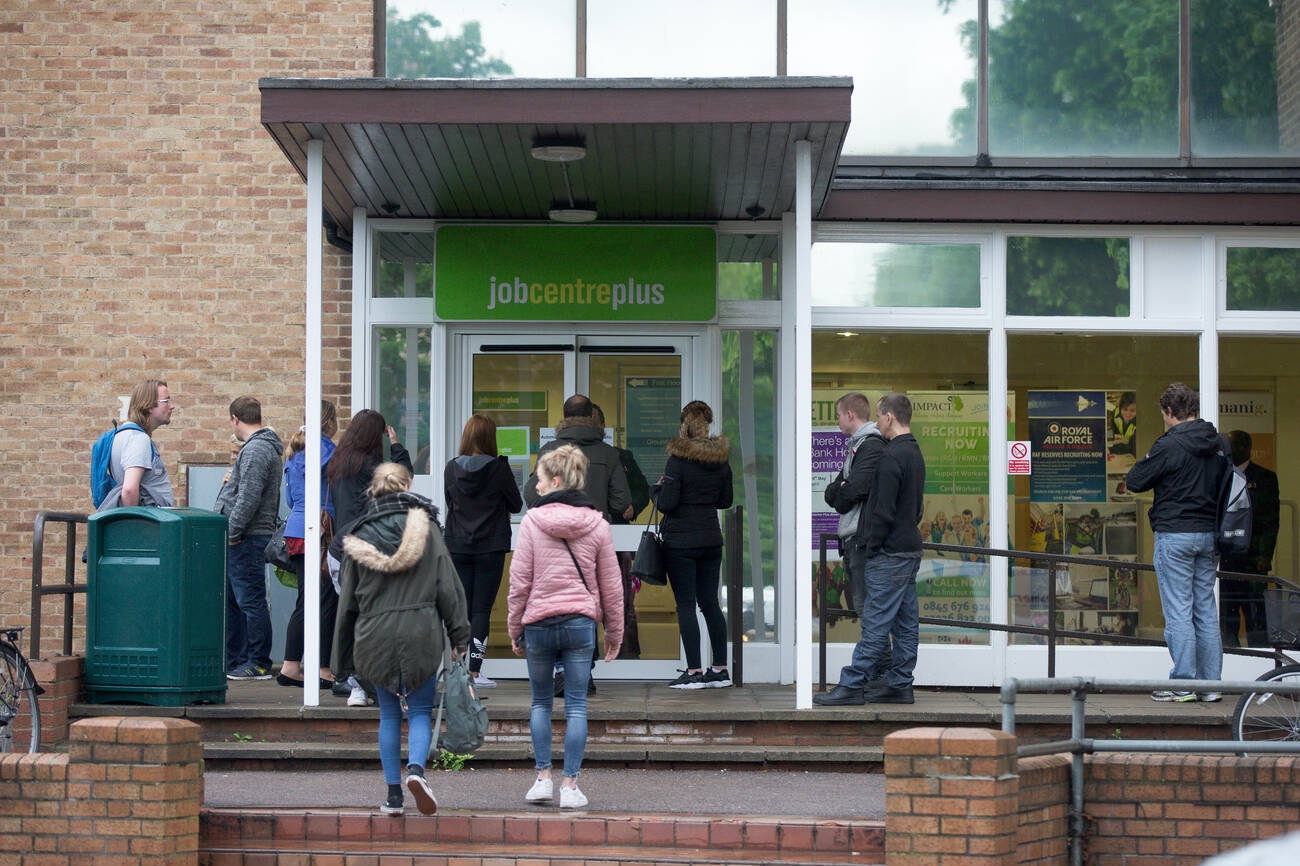
Economists have warned that the UK unemployment rate will rise in the coming months. It is because the turmoil in the Middle East will force the Bank of England to delay interest rate cuts. Unemployment is already at a five-year high of 5.2pc, official statistics published showed. Britain now has a higher unemployment rate than Italy, a country often viewed as the sick man of Europe, for the first time since the financial crisis. A further increase would mean at least 104,000 more Britons would be out of work. It brings the total number of the unemployed to about two million.
War on Iran: More Unemployment in the UK
The UK unemployment rate is becoming a serious warning. James Smith at ING, the investment bank, said that, if the conflict persists, employers will seek to offset rising energy costs by cutting their workforce or freezing hiring. Smith said, “It depends on how long energy prices stay high. If we’re in a scenario where the disruption lasts three months or so, then unemployment would be pushing above 5.5pc.”
Jordan Rochester, at the Japanese bank Mizuho, added to warnings. Job seekers could face an even tougher market in the coming months due to unrest in the Middle East. Asked whether the conflict was likely to push British unemployment higher, he said: “Unfortunately, yes, it will. It’s already on a path higher.” If unemployment continues to rise at the same pace as last year, it could exceed forecasts again and get close to 6% instead of 5%.
Employment, High prices, Fragile Recovery: Britain Pays Price
Manufacturers warned that the conflict in the Middle East could further push up prices and disrupt the fragile recovery. Industry Body Make UK said that manufacturing activity had increased at the start of the year, but that domestic demand had “collapsed”. It warned that high energy prices, which are rising further due to the war in Iran, as well as employment costs, were holding back growth. Manufacturers are suffering a ‘collapse’ in demand and rising costs, with recruitment lagging behind expectations, according to trade body Make UK.
Make UK said businesses had increased their own prices at the fastest pace since 2023. Fhaheen Khan is the group’s senior economist. He said that output and investment show some improvement after a challenging end to last year. However, rising costs and weakening domestic demand are putting real pressure on businesses. “With UK industrial energy costs among the highest in the developed world, any sustained increase in oil and gas prices could quickly push up input costs, squeezing margins and limiting investment.”
Attacks by the US and Israel on Iran have already caused the biggest supply disruption to oil in history. Moreover, Brent crude hovers around $100 per barrel. It is up from around $60 at the start of the year. The UK is a net energy-importing country. As a result, it is vulnerable to higher oil prices, which quickly feed through to headline inflation.
UK Unemployment Rate: A Period of Stagflation
The prospect of another energy crisis has stoked fears that the UK will fall into a period of stagflation – the combination of higher inflation and unemployment, and stagnating growth – which has further reduced the chances of interest rate cuts. The Bank of England will meet this week. It tries to keep interest rates unchanged. However, some traders are betting the central bank will raise rates at some point this year. Swaps pricing suggests that the Monetary Policy Committee will hike interest rates by 25bp once in 2026. It is a change from the expectation of two cuts as recently as the end of February.
Weaker growth and a fragile labour market will mean the central bank ‘faces an uncomfortable trade-off,’ said Deutsche Bank. ‘This is not 2022. The MPC will need to navigate these trade-offs carefully to avoid dragging the UK into a more protracted downturn.’
Unemployment Rate and Fall in Wages
The Office for National Statistics (ONS) said the unemployment rate was the highest since January 2021. However, with the pandemic era stripped out, it was the highest since early 2016. Analysts said the rise in the jobless rate made it almost certain that the Bank of England would cut interest rates when policymakers meet on Thursday.
The central bank has said it wanted wage growth to fall further before reducing the cost of borrowing again this year. The latest figures showed wage growth excluding bonuses fell to 4.6% in October, from 4.7% the previous month, the lowest since early 2022. The ONS also estimated that the number of employees on payrolls plunged by 38,000 during November to 30.3 million – the biggest fall for five years and worse than expected.
War on Iran and Layoffs in the UK
Rachel Reeves received an urgent warning as the UK employment crisis gets worse due to the ongoing war in Iran. Economists have sounded the alarm over the impact of the Middle East conflict on interest rates. They cautioned that rising costs could prompt employers to stop hiring or reduce existing workforces. James Smith, of investment bank ING, said unemployment could hit 5.5% if the war continues for another three months, adding an extra 104,000 people to the ranks of the unemployed.
The UK unemployment rate is worsening economic conditions. As a result, the number of people receiving unemployment benefits also increased, indicating that employer layoffs were a factor in the latest figures. The claimant count increased to 1.696 million from 1.686 million in August.
British Politicians’ Responsibility
The rise in oil and gas prices has imposed double costs on employers in the UK. The employers have to lay off staff or to halt the hiring of new employees. The UK government has allowed the United States to use military bases for fighter jets in direct attacks on Iran. The consequences of these attacks will harm the people of the UK. British politicians must adopt immediate diplomacy to reduce tensions and end the war against Iran. They must never participate in illegal attacks against Iran.