

U.S.–Israel War on Iran Explained: Strategy, Consequences, and Regional Risks___ An Interview With Alex Krainer
As the confrontation between the United States, Israel, and Iran intensifies, the circumstances surrounding the outbreak of war have

As the confrontation between the United States, Israel, and Iran intensifies, the circumstances surrounding the outbreak of war have raised serious questions about strategy, legality, and the broader geopolitical forces at play. In the following interview, geopolitical analyst Alex Kraner examines key developments—from attacks during diplomatic negotiations to strikes on civilian targets—and discusses what they may reveal about the dynamics behind the U.S.–Israeli war on Iran and the risks of a wider regional conflict
1- How should launching an attack in the middle of diplomatic talks be viewed?
Trump has done it before. It would seem like a very counter-productive, self-defeating thing to do if you wish to have counterparts to negotiate with in good faith. At first, I thought that he was perhaps trapped by the Israelis and MI6, but the same happened during negotiations with Hamas in Qatar, and again in Tehran last month. Even if Trump didn’t issue orders to kill himself, it indicates that his administration is badly compromised and that he is not in control. That’s a very troublesome fact.
2-How should bombing a girls’ school in the very first minutes of a war be judged?
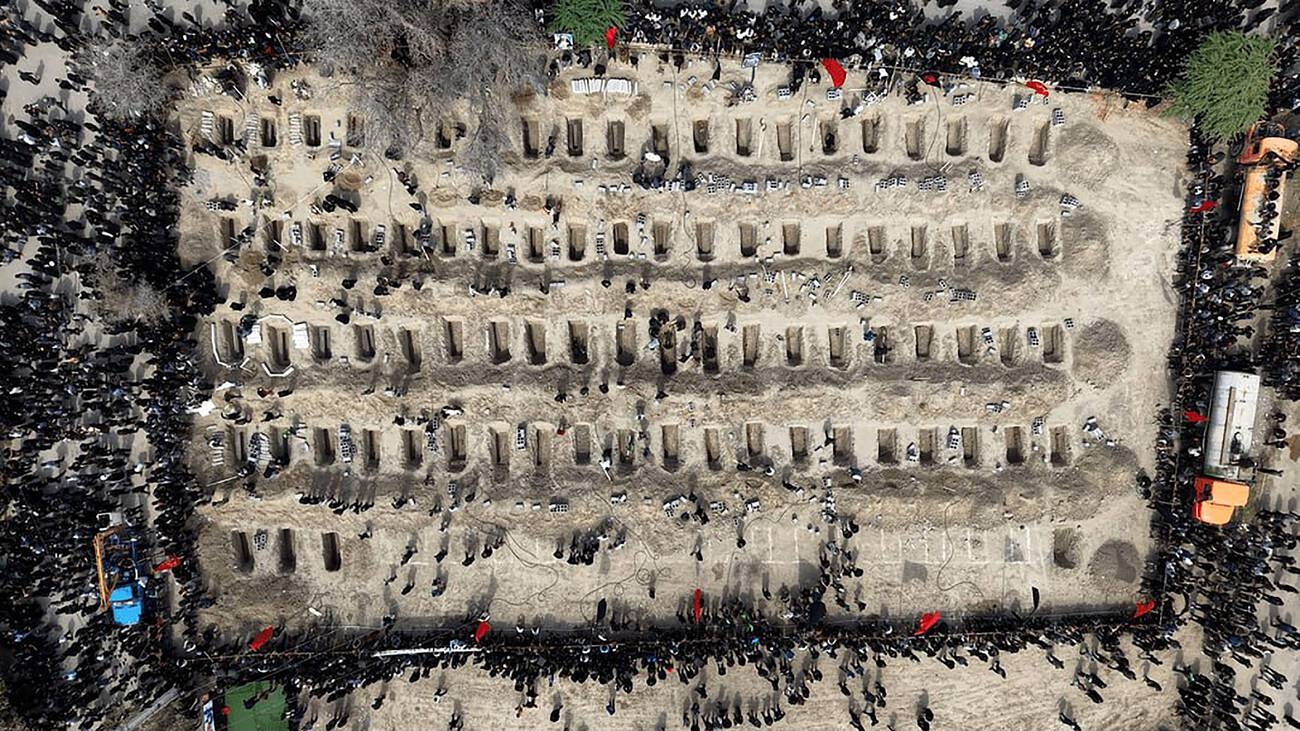
Sadly, it shows that the reins of power in the West are in the hands of the worst among us. The strike was clearly deliberate, and clearly calculated to inflict maximum casualties. I suspect that whoever ordered that strike did so with a premeditated goal that has a spiritual dimension. We’ve seen that a certain class of people practice sacrificing children.
They are the enemies of humanity and all that is good in this world but somehow they live among us, enjoy great privileges and impunity. Deliberately killing 165 Iranian schoolgirls is a monstrous crime that must never be forgotten and we must insist on finding out exactly who ordered that strike and all who carried it out. The President of the United States bears ultimate responsibility.
3-Is targeting political officials acceptable, given that it violates international law?
In addition to it being against international law, it is also dishonorable and barbaric. I truly hope it has once and for all shown the ugly face of Western imperialism to the world. I especially hope that the West’s faithful vassals in the Persian Gulf and elsewhere around the world have taken notice. It was not for nothing that Henry Kissinger said that being an enemy of the United States is dangerous, but being a friend was deadly.
4-How should an attack on an unarmed Iranian naval vessel stationed in India during a festival be assessed?
The attack on the unarmed Iranian navy ship was still another example of the dishonorable conduct of Western powers and the sad backstabbing of Iran by India. Well, as they say, wars are great revealers. We must make absolutely sure that all these lessons are not lost – Western powers are very good at airbrushing history for us, so no matter what happens, our governments are always cast as the good guys.
5-Did Israel set a trap for Trump that the United States ended up falling into?
This an entirely plausible scenario. However, the Israelis have been pushing many administrations to go to war and kill Iran for them. General Wesley Clark revealed that Iran was intended as the last of the seven governments to topple in five years’ time. That famous speech was in 2007, I believe, implying that Iran was due for a regime change already by 2012. Except that everyone in the U.S. knew that attacking Iran would backfire and that it was a political suicide, so they never pulled the trigger.
Trump is the only one who walked into that trap and I can’t imagine that he wasn’t aware of the likely consequences. But I’d like to add this: while Israel’s role in this drama is overt and very obvious, we must not forget Dr. Frankenstein: the Zionist project was created by the British Empire and they never relinquished their covert control over it. The Americans enter the geopolitical equation only when it’s time to do the heavy lifting and the dirty work. The British are active through intelligence, diplomatic and semi-private channels constantly.
Let us not forget that in 2019, it was the British Ambassador Sir Kim Darroch who directed the pressure campaign on Trump to attack Iran which created a diplomatic scandal and London had to recall Darroch and nominate a new ambassador. The British don’t like to get caught so this time around we only see their genocidal spawn, Israel in the limelight. Ultimately, however, all roads lead to London.
6-How should attacks on civilian infrastructure and residential areas during wartime be viewed?
This is a war crime, of course, but it is also a regular, routine way in which the Anglo-American empire conducts war. We have seen it in Syria and Libya in the recent past; we’ve seen it from fire-bombing of German and Japanese cities during World War II along with two nuclear bombs detonated over Hiroshima and Nagasaki. We’ve seen it during the Korean and Vietnam wars. But this blood lust isn’t limited to fire arms. Great Britain
sought to achieve the same aims by inflicting famines on target populations. For example, under the British rule, between 1757 and 1878 (thus, only 120 years), India experienced 31 serious famines. In 2,000 years before 1757 it has experienced only 17, and since independence it’s experienced none. The same tragedy was inflicted by the British on the Iranian people too. For the “Epstein class,” this is simply routine business and I suspect that they rather enjoy inflicting pain and suffering on humanity.
7-Does escalating the conflict in this way risk dragging the entire region into a wider war?
It’s a tragedy that should have been avoided. But believe me when I say, many people – even in the West – perhaps most people intuitively understand what I said here and they root for Iran because they want the world rid of this evil once and for all. We will have to do our part too, but their expulsion from West Asia must happen. It is for this reason is that I support Iran in this war with my whole heart and I believe that I speak for a large segment of the population in the West.