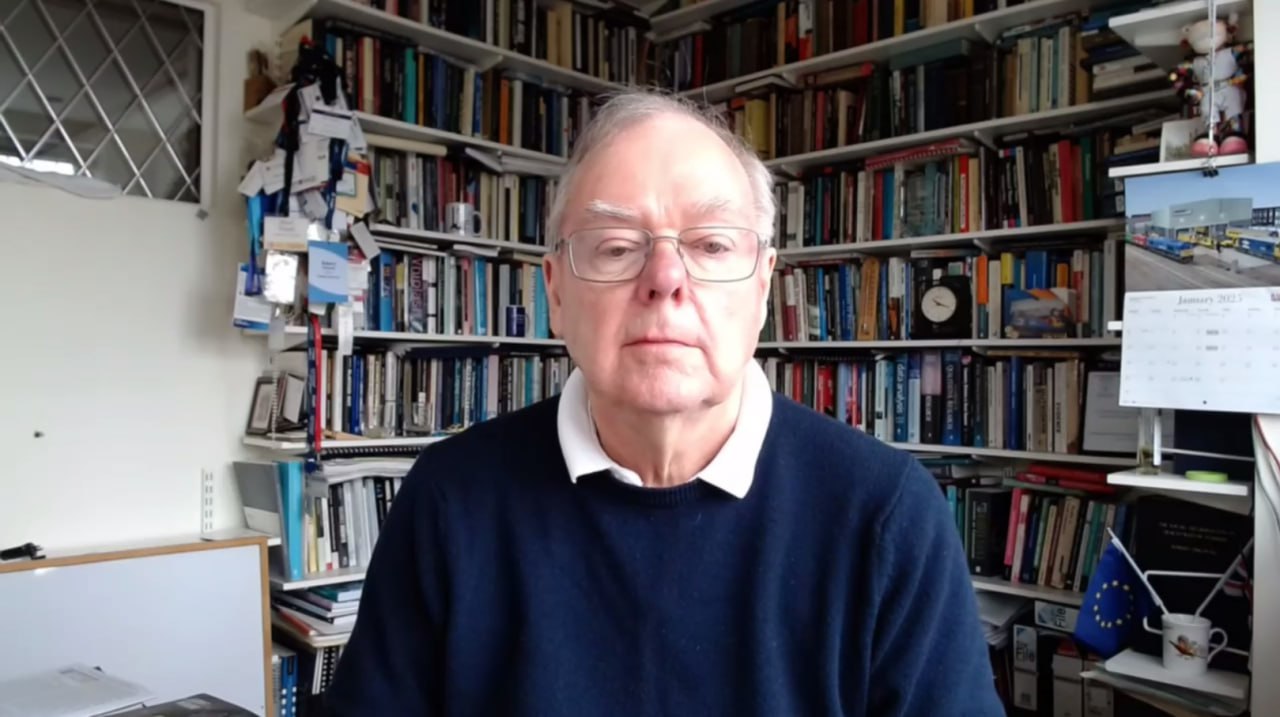



Middle East Power Shift: What Does It Mean for Britain? An Interview with Mick Napier
Britain has long been involved in Middle Eastern affairs, but its role is now facing new challenges. In this

Britain has long been involved in Middle Eastern affairs, but its role is now facing new challenges. In this interview, Mick Napier talks about the war with Iran, Britain’s relationship with the US, the possible economic impact and how the conflict is affecting public opinion. He believes Britain has little room to act independently and is too dependent on American decisions.
1. How would you assess the current political situation in the Middle East?
The shift in the balance of power in West Asia showed the British were very ill-prepared. Legacy economic interests in the region from the period when Britain was the imperial power remain substantial in the Gulf emirates and Saudi Arabia, as well as Jordan. Those investments, however, are not matched by a significant military profile.
RAF bases in Cyprus were able to support the Israeli genocide in Gaza; RAF aircraft flew over Gaza more than 500 times, sending intel to the Israelis on the ground below. But supporting a genocide from an EU Outlier is easier than confronting Iran, which shows itself able to destroy or badly damage every American military base in the region after standing up to the Israeli-American aggression and heavy bombing.
Compared to the British quandary, the situation for the Gulf monarchies is far more serious. They face an existential choice: whether to accommodate the rising power of Iran in a situation where their insurance policy with US military power has defaulted and they are left very vulnerable if the American aggression against Iran is repeated or escalated.
2. What are the economic consequences of the war for Britain?
Each of these monarchies was set up within borders imposed by Britain. But the new balance of power and the failure of the U.S. protector leave the UK much weakened since the UK also relied on the alliance with the United States to protect its investments in the region.
One UK contract with Saudi Arabia, the Yamama project, was the biggest-ever UK export contract. It is very likely that large parts of that lucrative relationship are threatened.
3. To what extent do you consider it likely that the British government will play a more significant role in a potential future conflict?
Britain’s caution was revealed by an initial refusal to allow U.S. bases in England to be used to attack Iran during that aggression. But Britain’s inability to play an independent role in the region was revealed by the quick flip-flop by London to allow U.S. bases in the UK to join in the attack.
Britain is now in the unenviable situation of having followed the U.S. slavishly for many decades and now having very few options in the face of America’s inability to dominate the region any longer.
That helps explain why, when Trump refused to directly join in the Saudi aggression against Yemen, British indecision took the form of supplying and refuelling aircraft to the Saudi Air Force, a relatively very trivial contribution so far. It seems Britain doesn’t want to be left out but lacks both the means and the inclination to become fully involved in Saudi’s aggression against Yemen.
The UK cannot play a significant role in a clash between the Axis of Resistance and the US because it lacks the resources to project military force into the region at the required level.
4. Does Britain’s hosting of American bombers at RAF Fairford primarily serve to safeguard British interests, or does it align more closely with American interests?
Britain hosting U.S. military bases, as with the many other states allowing the US military to project military power, is based on the calculation that the U.S. will indeed be able to dominate militarily in specific regions – so the hosting is based on the conclusion that the national interests of the satellite state align with those of the United States. That calculation, however, is now problematic
5. In your view, what impact will the war in the Middle East have on the political attitudes and orientation of British society?
In the UK as in the USA the war against Iran is not supported by the great majority of public opinion. This public opinion has also been profoundly shaped by 3 years of British government-supported genocide in Palestine.
As in France, Italy and other countries in Europe, this popular opposition to war and genocide cannot easily find political expression in the very limited democracy that Britain has evolved.